The Dutch have earned a deserved reputation for their technical creativity, tactical awareness, attacking possessive style, and ability to know where and how on a football field to find their team mates. These qualities have not come about through accident, however. They are the result of a guiding philosophy and methodology that are instilled in players starting at the grass roots youth level.
Dutch football is known for its patient build-up from the back, and early deep pass to set-up the attack, and the use of the “third” – or free- man to exploit goal scoring opportunities. Dutch players have a certain arrogance on the ball. We embrace individuality, personality and confidence which has produced some of the most amazing talent.
Total Football
Dutch football did not always have this reputation though. Before 1974, it was known for being amateurish, unrefined and technically crude. That all changed with the World Cup of that year, as the national team played a brand of “total football”, led by their captain and talisman, Johann Cruyff, which saw them go all the way to the finals, before losing narrowly to West Germany. Cruyff also exported the style to Barcelona, whom he joined from Ajax, laying the foundations for the style of play that the Spanish club employs to this day.
Total football is a tactical theory which allows any outfield player on a soccer field to take the position of another. So, if one player moves out of position, a team mate will immediately rush to fill it, preserving the organisational integrity of the side. This means anybody can play as an attacker, midfielder, or defender, as the situation demands. The only player who sticks to their specified position is the goalkeeper.
To play total football, players need to be comfortable in multiple positions, so they need to be intelligent and technically gifted.
Rinus Michels
The Dutch did not invent “Total Football”. Instead a variation of it had been played by the great Hungarian national side of the early 1950s, by River Plate in the 1940s, and by the Burnley team that surprisingly won the Football League in the 1959 – 1960 season.
However, it was Rinus Michels, coach with Ajax and then the Dutch national side, who reworked the theory, with the use of Cruyff as his nominal centre-forward, but with licence to roam freely around the pitch, using his intelligence and technical ability to find weaknesses in the opposition defence, and to create chances.
Legacy
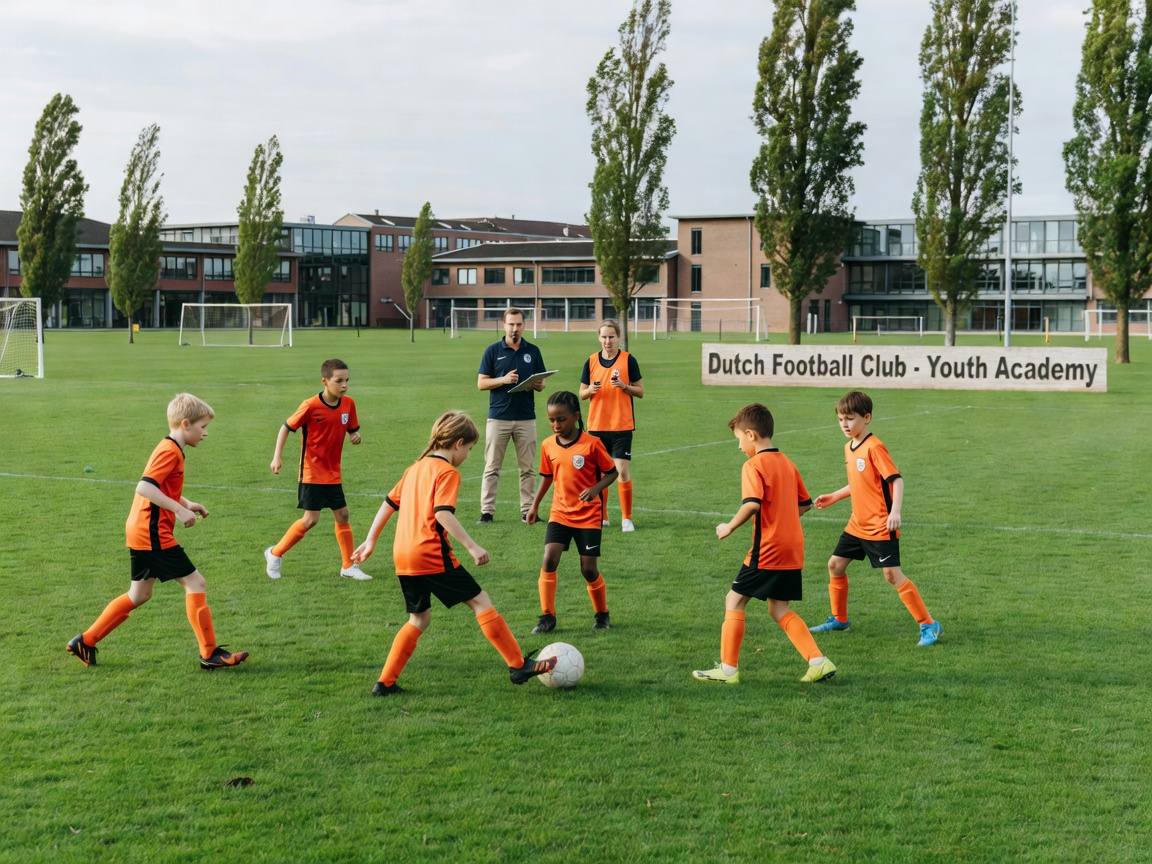
Even today, Michels’ ideas form the basis of all Dutch Youth soccer programmes, where the emphasis in training is always placed on a player’s ball control, and where development of tactical awareness always receives top priority. Technical and tactical instructions are carried out through the application of small-sided games, so that players get to experience a training environment that is similar to what they will face in a real game situation.
Players are grouped according to age and ability, and moved up to higher-level groups depending on individual progression and the recommendation of coaches. The emphasis is on providing a fun but challenging environment for youth players. By focusing on developing both their individual skills and ability players improve for the greater good of the team collectively achieving greater results in all aspects of the game.