
How to Choose the Right Elite Soccer Clinic
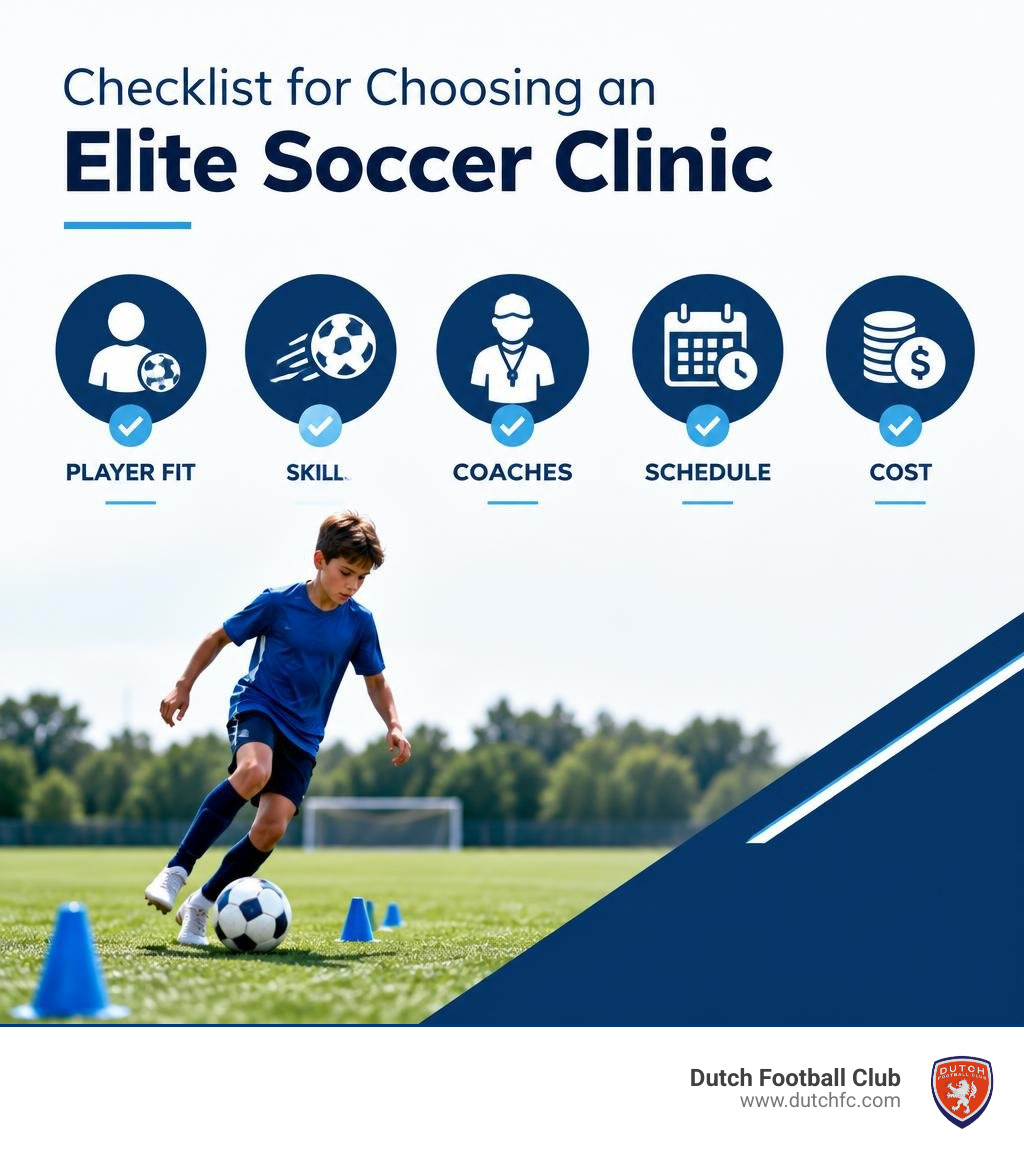
An elite soccer clinic is focused training for young players who are ready to work on specific skills in a more demanding setting. To choose one, look for a good match between your child's age and skill level, the skills taught, and the coaches' experience. Before signing up, check the schedule, location, cost, and any tryout or equipment requirements. "Elite" on its own tells you very little; the training plan matters more.
I'm Wilco Ravestijn, a spokesperson for Dutch Football Club in Frisco, where we support youth development through Dutch-style soccer training. I'll help you assess an elite soccer clinic by what it offers your child, not just what it calls itself. For broader context on how youth development pathways are structured, the U.S. Soccer Federation's Player Development Initiatives provide a useful reference for age-appropriate training standards.
What Defines a High-Performance Elite Soccer Clinic?
Every soccer parent has seen the flyers: bright graphics, bold promises, and the word "elite" stamped across the top in capital letters. In youth sports, that word gets used freely. However, genuine high-performance training is defined by structure, intensity, and measurable player development.
A true high-level soccer clinic does not simply run scrimmages or cycle through generic cone drills. Instead, it creates an immersive learning environment designed to push players slightly outside their comfort zones. This training stresses high technical intensity, intentional tactical awareness, and speed of thought.
At Dutch Football Club, our approach to high-performance training is built on several advanced pillars:
- Speed of Play and Decision-Making: Moving beyond isolated ball-handling to executing technical actions under strict time and spatial pressure.
- Cognitive Development: Teaching players to scan the pitch before receiving the ball, read visual cues, and anticipate the next two phases of play.
- Position-Specific Functional Movement: Replicating real-game scenarios tailored to the technical and tactical demands of specific roles on the pitch.
- Intentional Feedback Loops: Delivering direct, corrective coaching in real time so mistakes become immediate teaching moments.
When these elements come together, training bridges the gap between practice repetition and game-day performance.
Understanding the Target Audience for an Elite Soccer Clinic
Elite clinics are not built for every stage of development, and recognizing where your child stands is the first step toward making a smart investment.
These programs are specifically tailored for competitive, club-level players who already have strong technical fundamentals and want to sharpen specific weaknesses or master advanced concepts. If a player is entirely new to the sport, throwing them into a , high-pressure clinic can feel overwhelming rather than inspiring. Beginners thrive best when they can build confidence through foundational work like introductory soccer camps for beginners.
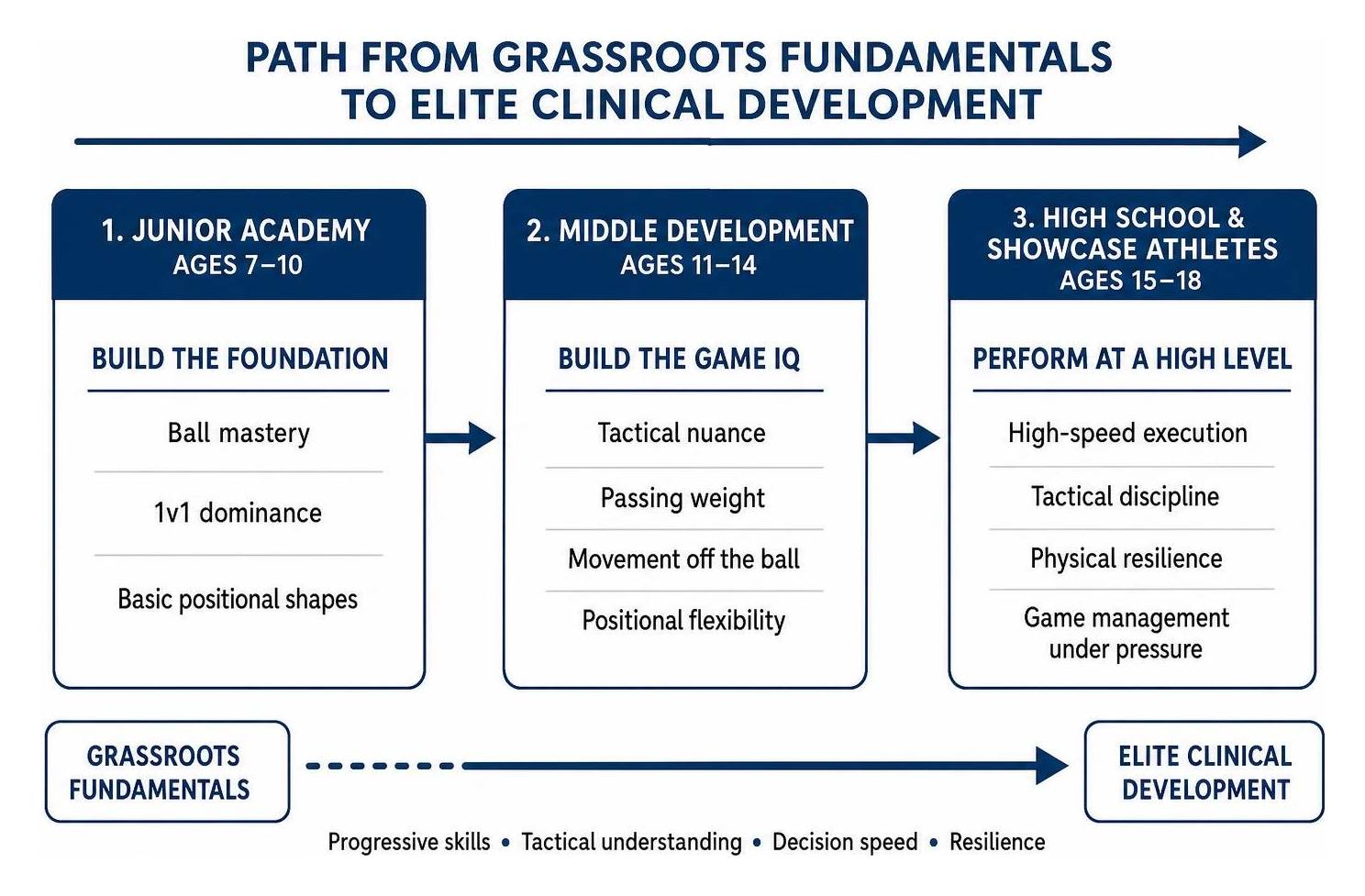
For competitive players, age brackets and developmental readiness dictate clinic placement:
- Junior Academy Players (Ages 7–10): Focus shifts from basic physical coordination to ball mastery, 1v1 dominance, and understanding basic positional shapes.
- Middle Development (Ages 11–14): Training introduces tactical nuance, passing weight, movement off the ball, and positional flexibility.
- High School & Showcase Athletes (Ages 15–18): Sessions emphasize high-speed execution, tactical discipline, physical resilience, and game management under pressure.
Placing your child in the right bracket ensures they are neither bored by the curriculum nor overwhelmed by the pace of play.
Core Curriculum: Advanced Skills and Position-Specific Training
What should your child actually be learning during these intense sessions? A well-designed curriculum breaks complex team tactics down into functional, trainable actions.
First-touch mastery is the cornerstone of any advanced curriculum. High-level clinics do not just ask players to stop the ball; they teach players how to direct their first touch away from incoming pressure to open up passing lanes immediately.

Beyond ball control, modern clinics provide specialized positional work:
- Midfielders: Learn half-turn body positioning, scanning intervals, and breaking lines with incisive passing.
- Wingers and Attackers: Focus on finishing under duress, aggressive 1v1 separation, timing runs into the box, and clinical combination play in the final third.
- Defenders: Master 1v1 containment, defensive footwork, cutting off passing lanes, and building attacks out from the back.
- Goalkeepers: Elite modern setups incorporate dedicated goalkeeper training, prioritizing footwork, shot-stopping angles, distribution under pressure, and commanding the penalty area.
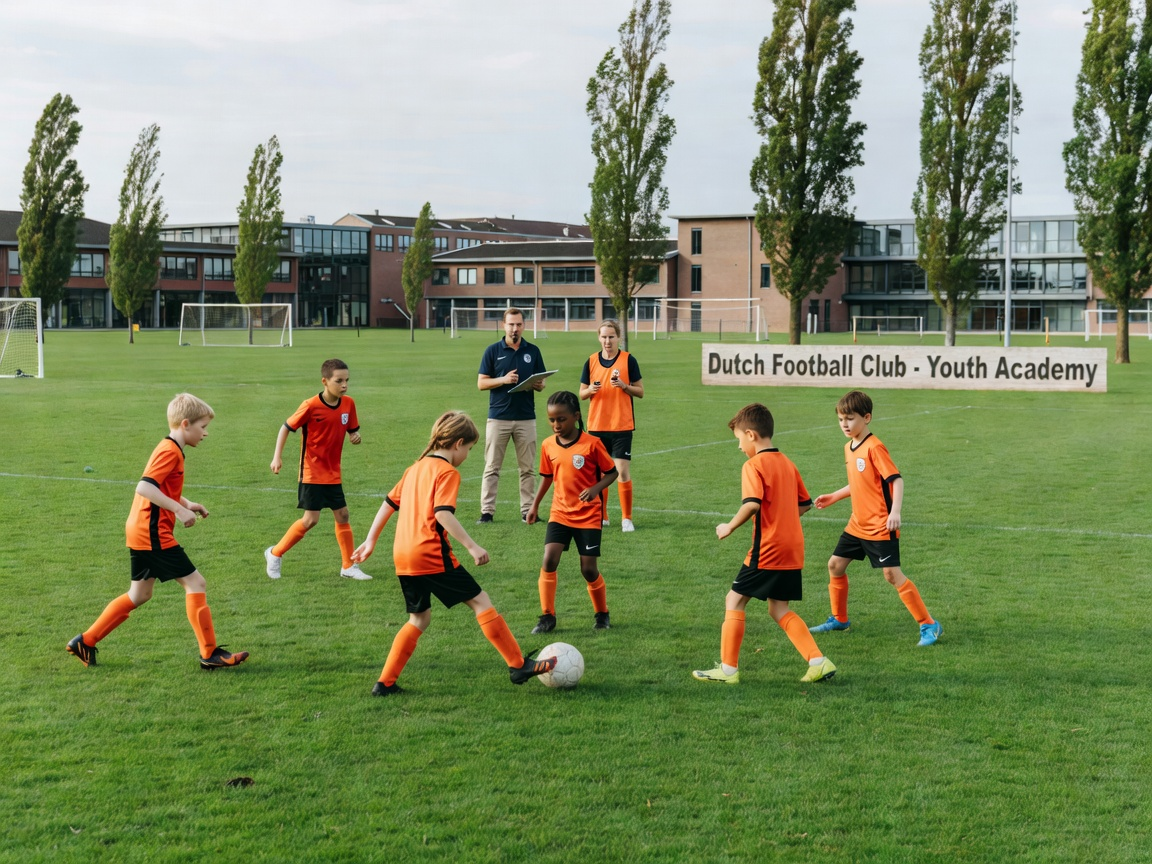
By practicing these position-specific demands in small-sided, game-like scenarios, players develop the spatial awareness required to make confident decisions on the field.
Evaluating Coaching Credentials and Training Philosophy
The curriculum is only as good as the coach delivering it. When vetting a clinic, look closely at the coaching staff's credentials, pedagogical background, and coaching style.
Top-tier programs employ instructors holding recognized coaching licenses from governing bodies such as the United States Soccer Federation (USSF) or UEFA (such as the UEFA 'A' or 'B' licenses). Coaches with professional or collegiate playing experience offer valuable real-world insight, but their ability to teach, explain, and connect with young athletes is what truly matters.
Equally important is the organization's overarching philosophy. At Dutch Football Club, our training is guided by our developmental club philosophy, rooted in the Dutch "Total Football" tradition. This methodology teaches every player on the field to think proactively, communicate clearly, and take creative risks.
Coaches should cultivate a competitive yet supportive environment, consistently upholding our culture values of discipline, sportsmanship, and respect. A clinic that relies purely on running laps or harsh criticism without tactical instruction will rarely produce long-term player development.
Specialized Sessions vs. General Camps
Parents often ask whether they should enroll their child in a week-long general soccer camp or a targeted micro-clinic. Both options serve valuable purposes, but they target different developmental goals.
General camps are great for maintaining fitness, enjoying the social aspects of the game, and getting extra touches during school breaks. Specialized clinics, such as our focused game changers clinic, zero in on specific technical deficits—such as finishing under pressure, 1v1 attacking, or defensive transition play.
| Feature | Standard Recreational Camp | Specialized Elite Soccer Clinic |
|---|---|---|
| Primary Focus | Fun, broad gameplay, basic skills | High-intensity technique, tactical decision-making |
| Player-to-Coach Ratio | Typically 15:1 or higher | Low ratios, typically 8:1 to 10:1 |
| Curriculum Depth | General all-around play | Deep dive into specific mechanics and positions |
| Player Base | Mixed experience levels | Competitive, club-level athletes |
| Feedback Mechanism | General participation praise | Detailed, real-time tactical correction |
| Session Duration | Often half-day or full-day weeks | 1.5 to 3 hours per focused session |
If your athlete has clear competitive goals, targeted micro-clinics deliver the deep focus required to make meaningful technical progress.
Key Logistics: Schedules, Formats, and Player Investment
High-intensity training requires total physical and mental engagement. Because of this, elite clinics are structured differently from standard day camps.
Rather than running 6-hour marathons that leave players physically exhausted by noon, specialized clinics usually operate in sharp, 90-minute to 2.5-hour blocks. This format keeps players fresh, focused, and performing at peak mental speed throughout every drill.

When planning your child's schedule, take these logistical factors into account:
- Facility & Surface: Training on high-quality turf or well-maintained natural grass allows for true ball rolls and reduces unnecessary joint stress. Our training base in Frisco, Texas, provides an ideal environment for technical development.
- Seasonal Timing: In October 2026, many families use fall micro-clinics to fine-tune tactical awareness mid-season, while winter and summer sessions are ideal for dedicated technical improvements.
- Player Workload: Ensure the clinic schedule complements your child’s weekly team practices and matches rather than causing physical overload or burnout.
How to Register and Prepare for an Elite Soccer Clinic
Getting ready for an advanced clinic requires a bit of practical preparation. Because roster sizes are strictly limited to maintain low coach-to-player ratios, registration is usually handled online and fills up quickly.
Many competitive players use these high-level clinics to prepare for upcoming club tryouts 2026-2027, sharpening their touch and building confidence before team selections begin.
To make the most of the clinic from day one, run through this quick preparation checklist:
- Proper Footwear: Bring firm-ground cleats suited for modern artificial turf or natural grass surfaces.
- Safety Gear: Properly fitted shin guards worn underneath soccer socks are mandatory.
- Hydration & Fuel: A refillable water bottle or electrolyte drink, along with a light, complex-carbohydrate snack consumed 60–90 minutes beforehand.
- Performance Mindset: Remind your child to listen actively, ask questions, and embrace mistakes as part of the learning process.
Frequently Asked Questions About Elite Soccer Clinics
What is the difference between an elite soccer clinic and a recreational camp?
The main differences come down to pace, coaching credentials, and technical depth. Recreational camps focus on broad engagement, games, and keeping kids active. In contrast, an elite soccer clinic features licensed coaches running high-intensity drills designed for competitive players looking to sharpen positional skills and speed of thought. If you are searching for elite soccer camps near me, look for programs with transparent curricula and experienced coaching staff.
How do I know if my child is ready for elite-level training?
Your child is likely ready for elite-level training if they have strong ball-handling fundamentals, play in a competitive club league, and show the self-motivation to improve. If your athlete regularly practices on their own and wants constructive coaching, moving through structured development programs is a natural next step.
What should players bring to a specialized clinic?
Players should arrive dressed in training gear with their soccer ball pumped to the correct pressure. They will need firm-ground cleats, shin guards, a large water bottle, and weather-appropriate training layers. Most importantly, they should bring an open, focused mindset ready to take on new technical challenges.
Conclusion
Choosing the right clinic comes down to matching your child's specific developmental needs with an intentional curriculum and experienced coaching. The right environment challenges players technically, sharpens their tactical awareness, and fosters a genuine love for the game.
At Dutch Football Club in Frisco, Texas, our player-first development pathway combines the renowned Dutch "Total Football" philosophy with structured, high-value training. We invite you to explore our upcoming calendar of elite soccer camps to find the right program to help your athlete elevate their game.