
Is Competitive Soccer Right for Your Child?
Competitive soccer for kids offers more structured training and tougher games than recreational soccer. Players usually try out for an age-group team, practice during the week, and play league games on weekends. The right fit depends less on being the best player today and more on whether your child enjoys the challenge and your family can manage the schedule and costs.
For families in Frisco and North Texas, it helps to look beyond the tryout. Ask how a club develops players, forms teams, teaches the game, and explains fees and travel before you commit. According to U.S. Youth Soccer, competitive play is part of a broader player development pathway that includes age-appropriate training and league structures.
I'm Wilco Ravestijn, a spokesperson for Dutch Football Club in Frisco. My work with the club gives me a local perspective on competitive soccer for kids and the value of clear, affordable development options.
Understanding Competitive Soccer for Kids vs. Recreational Play
Recreational leagues serve as a wonderful entry point for young athletes discovering the game. However, as players grow in both enthusiasm and basic coordination, many outgrow the casual nature of weekend-only matches with volunteer parent coaches. Moving into competitive club soccer represents a shift from casual play to intentional athletic and technical development.
In competitive environments, training moves under the guidance of licensed coaches who follow structured, progressive curricula designed to build tactical awareness and technical mastery over time. If you want an in-depth breakdown of these structural differences, explore our comparison guide of club, school, and recreational soccer programs.
| Feature | Recreational Soccer | Competitive Youth Soccer |
|---|---|---|
| Primary Goal | Introduction to sport, social fun, exercise | Technical mastery, tactical intelligence, competitive growth |
| Coaching | Volunteer parents / community leaders | Licensed, professional coaching staff |
| Roster Placement | Open registration, school/neighborhood grouping | Evaluated tryouts, ability-based team tiers |
| Training Frequency | 1 session per week (45–60 mins) | 2–4 sessions per week (75–90 mins) |
| Season Duration | 8–10 weeks (Spring/Fall separate) | 9–10 month continuous seasonal commitment |
| Travel Scope | Local community parks | Regional league play and statewide/national tournaments |
| Playing Time | Guaranteed equal playing time rules | Earned based on development, effort, and tactical need |
Starting Age and the Seasonal Age Format
Most organized youth soccer programs begin their competitive tracks between the U8 (under 8) and U11 age brackets. Age placement in youth soccer follows birth-year guidelines governed by U.S. Youth Soccer (USYS). Under standard seasonal age rules (spanning the seasonal window from August 1 through July 31), children compete in brackets based on the year they were born rather than their current school grade level.
Understanding developmental readiness is key. A child ready for competitive play demonstrates an intrinsic passion for the ball, an ability to focus during extended practices, and excitement when facing stronger opponents. If your child is eager for more structured ball work, searching for a quality youth soccer academy near me can help bridge the gap between early grassroots fun and higher-tier club play.
Balancing School Sports and Club Schedules
As players enter middle and high school, families frequently wonder how to balance school sports with competitive club commitments. High school soccer provides an exciting community experience, but club soccer remains the primary engine for long-term technical advancement and college recruitment exposure.
Most competitive clubs structure schedules to complement the high school calendar. During intensive school seasons, clubs often offer supplemental training sessions, winter indoor packages, and adjusted match calendars so players do not burn out. Multi-sport participation is entirely manageable when families maintain open communication with club coaches and prioritize proper rest, nutrition, and academic planning.
Navigating Tryouts and Team Formation

Tryouts are an annual tradition in competitive youth soccer, generally held in May and June for the upcoming seasonal year. While tryouts can feel intimidating for both young athletes and their parents, understanding the evaluation framework removes the mystery.
Coaches do not simply evaluate who can kick the ball the hardest or run the fastest. Instead, evaluations focus on four core pillars:
- Technical Skill: First touch, passing range, close-space dribbling, and ball manipulation.
- Tactical Understanding: Spatial awareness, anticipation, off-the-ball movement, and transition speed.
- Physical Foundations: Agility, balance, coordination, and stamina.
- Psychological Attributes: Coachability, work ethic, resilience under pressure, and how well a player communicates with teammates.
Clubs often employ the squad system to ensure players are surrounded by peers of similar developmental trajectories, maximizing training efficiency across age groups.
What to Expect During Tryouts for Competitive Soccer for Kids
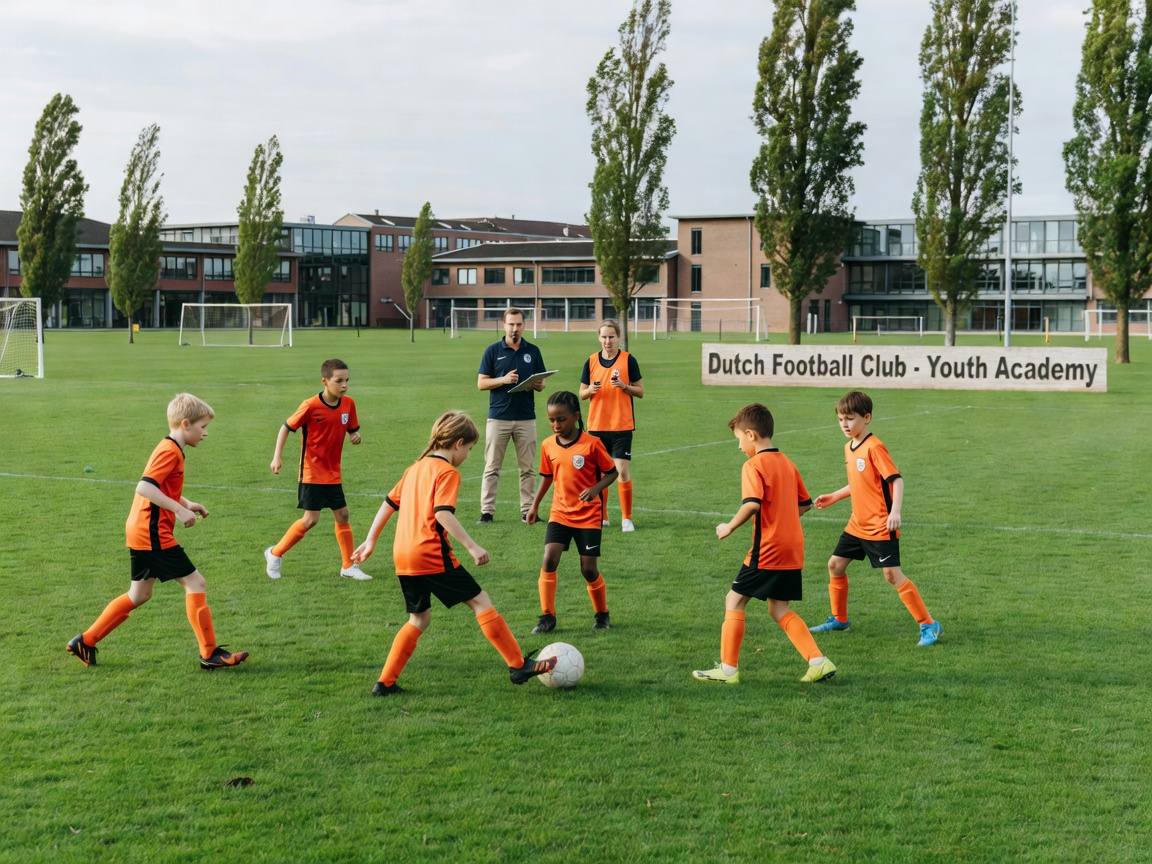
Tryouts typically consist of dynamic warm-ups, technical rondos, directional passing drills, and extensive small-sided scrimmages (3v3, 4v4, and 7v7). Small-sided games give evaluators an unobstructed view of how quickly a player processes visual information, makes decisions, and reacts when possession changes.

Following evaluations, clubs extend formal roster invitations. Families looking to plan their season ahead can review the dates and procedures outlined for tryouts 2026 2027 to stay prepared for upcoming evaluation windows.
Team Placement and Roster Structuring
Competitive soccer organizations generally field multiple tiered squads within each age division (such as Premier, Select, or Academy tiers). This tiering ensures every athlete plays in an environment matching their current developmental level—neither getting overwhelmed by excessive speed of play nor stalling in a league that offers no challenge.
Rosters are structured with deliberate depth to accommodate league matches, multi-game weekend tournaments, and unforeseen injuries. To see how age brackets and divisions are arranged across our developmental levels, review our current teams.
Financial Investments, Time Commitments, and Family Expectations

Stepping into competitive soccer requires a realistic understanding of the commitments involved. Unlike a six-week town rec program, competitive club soccer is an annual journey that asks for dedication from both player and parent.
- Financial Scope: Beyond base club registration dues, family budgets should account for player uniform kits (home/away jerseys, shorts, socks, warm-ups), league registration, referee fees, winter indoor training packages, and tournament travel (lodging, fuel, and meals). Many clubs provide sibling discounts or payment schedules to ease budgeting.
- Weekly Time Commitments: Players typically train 2 to 3 evenings per week for 75 to 90 minutes per session, with 1 to 2 league games every weekend during active seasons.
- Family Volunteering: Strong clubs depend on family engagement. Programs often require a set number of volunteer hours per season (supporting team management, tournament operations, or field maintenance) with optional buyout alternatives for busy households.
Managing Playing Time and Development Priorities
One of the biggest adjustments for families transitioning from recreational to competitive soccer involves match minutes. In competitive environments, playing time is not automatically divided equally on a stopwatch. It is earned through practice performance, tactical execution, positive attitude, and effort.
However, winning matches should never supersede individual development at the youth level. A healthy club environment prioritizes long-term skill acquisition and game comprehension over chasing trophies. Families can dive deeper into how minutes are managed by reviewing our philosophies on playing time in club soccer and why coaches reject the idea of results vs performance the false choice in youth soccer.
Coaching Standards and Club Culture
The quality of your child's soccer journey hinges directly on the standard of their coaching and the environment cultivated by the club. Licensed coaches trained in modern developmental methodologies build safe, motivating spaces where young players feel confident taking creative risks on the ball without fearing mistakes.
A values-driven club emphasizes character, sportsmanship, and mental fortitude alongside footwork. We encourage parents to evaluate our culture values and explore our complete club philosophy to understand how the Dutch "Total Football" tradition shapes creative, intelligent, and confident players.
Long-Term Player Pathways and Competitive Progression
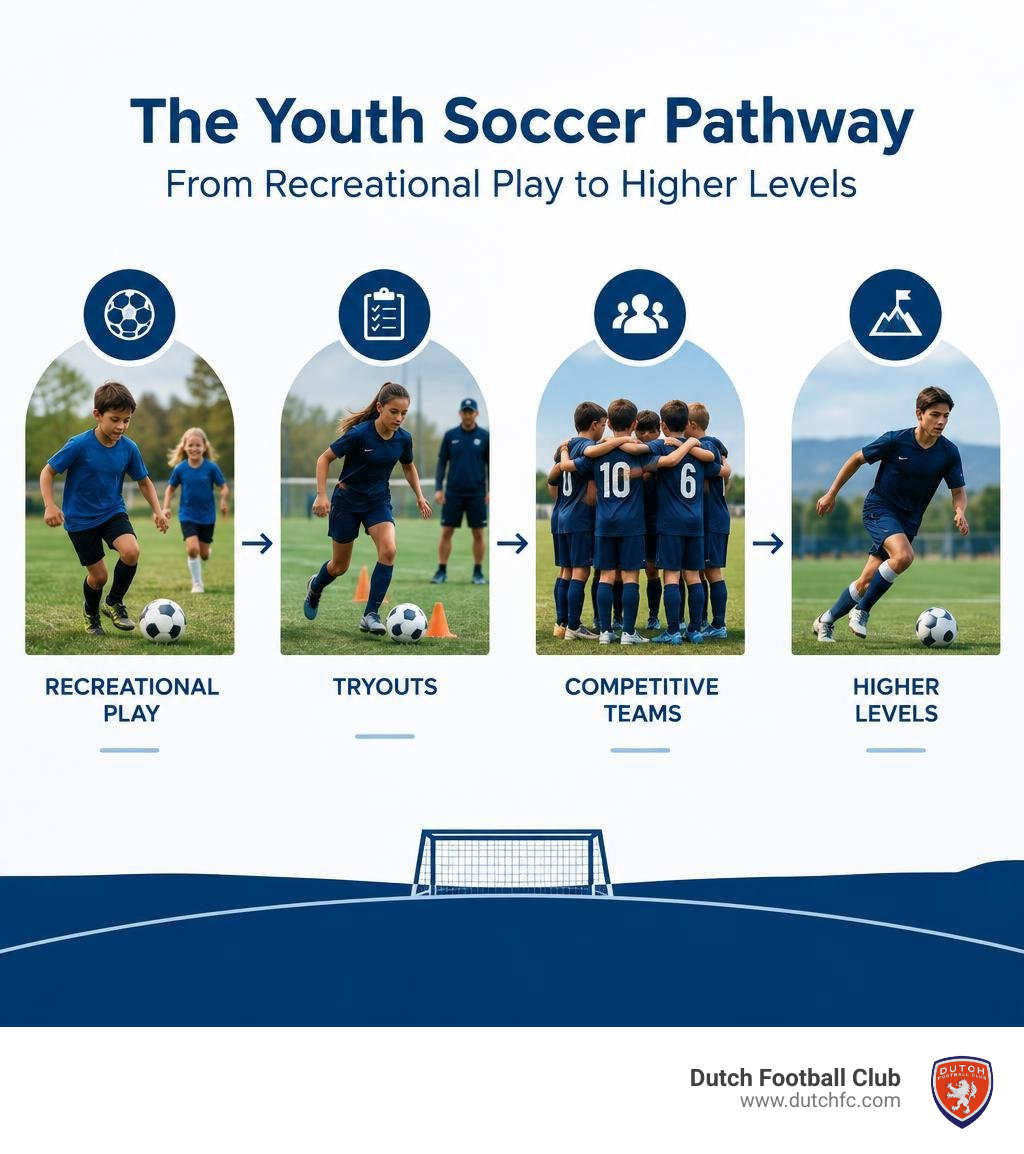
A structured competitive program gives young athletes a clear ladder to climb as their abilities and ambitions grow. While recreational leagues operate within closed local boundaries, the competitive soccer ecosystem connects local clubs to regional premier leagues, state cup championships, and national showcase platforms.
Pathway Progression in Competitive Soccer for Kids
As players progress from early academy age groups into older age brackets, the developmental pathway expands naturally:
- Junior Academy (U8–U10): Focuses heavily on individual ball mastery, 1v1 dominance, and building a genuine passion for playing.
- Select & Premier Club (U11–U14): Introduces full-field tactical systems, positional interchange, match analysis, and elevated league competition.
- High School & Showcase (U15–U19): Focuses on tactical maturity, high-intensity athletic conditioning, and college recruitment showcase tournaments.
- Pre-Professional & Advanced Pathways: Provides top-tier high school and collegiate athletes a bridge toward semi-professional competition, such as UPSL 1st Team play.
Frequently Asked Questions About Competitive Youth Soccer
At what age should a child transition from recreational to competitive soccer?
The U9 to U11 age window is widely considered the optimal period to transition into competitive soccer. By this stage, children have developed the basic motor skills, spatial reasoning, and attention span needed to absorb structured technical coaching and tactical concepts.
How much time and travel is required for competitive soccer?
Expect 2 to 3 weekday evening practices (averaging 3 to 4.5 hours of training weekly) plus weekend matches. Local league games usually take place within a 30 to 60-minute driving radius. Tournament weekends, which happen 2 to 4 times per season, may involve statewide or regional travel.
How are player development and game results balanced in club soccer?
At developmental ages, performance, tactical execution, and player growth always take priority over the final scoreline. A coach who benches developing players simply to protect a 1-0 win hinders long-term growth. To learn more about our approach to developmental minutes, read our guide on youth soccer playing time.
Conclusion
Entering competitive youth soccer is an exciting step in a child's athletic journey. When families choose a club that values long-term player development over short-term trophies, children develop not only technical skill and tactical intelligence, but also life skills like resilience, teamwork, and leadership.
At Dutch Football Club, we provide Frisco and North Texas families with a high-value, low-cost training model built on the world-renowned Dutch "Total Football" philosophy. Whether your player is taking their first step into academy soccer or aiming for top-tier competitive play, we are dedicated to helping every athlete achieve their full potential on and off the pitch. Explore our upcoming programs or contact our coaching staff to find the right team for your child today!