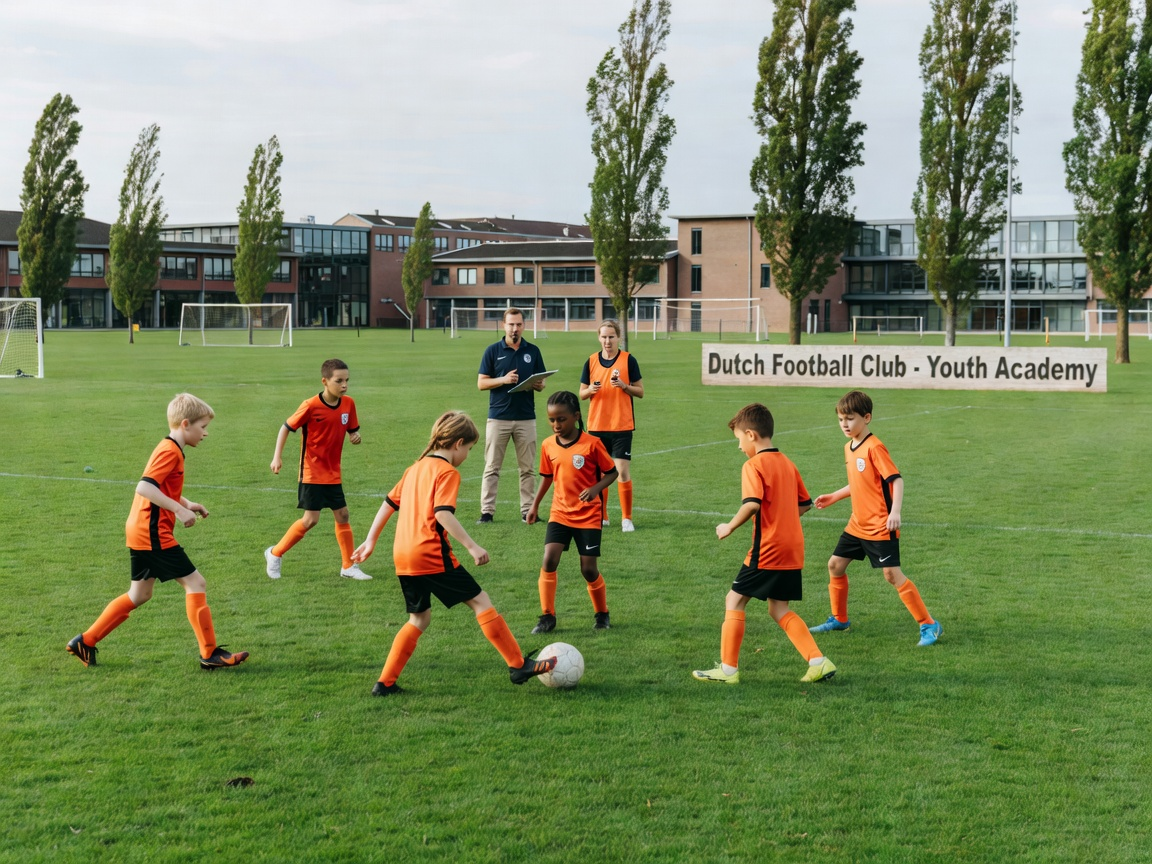

Why Playing Time Matters in Youth Soccer
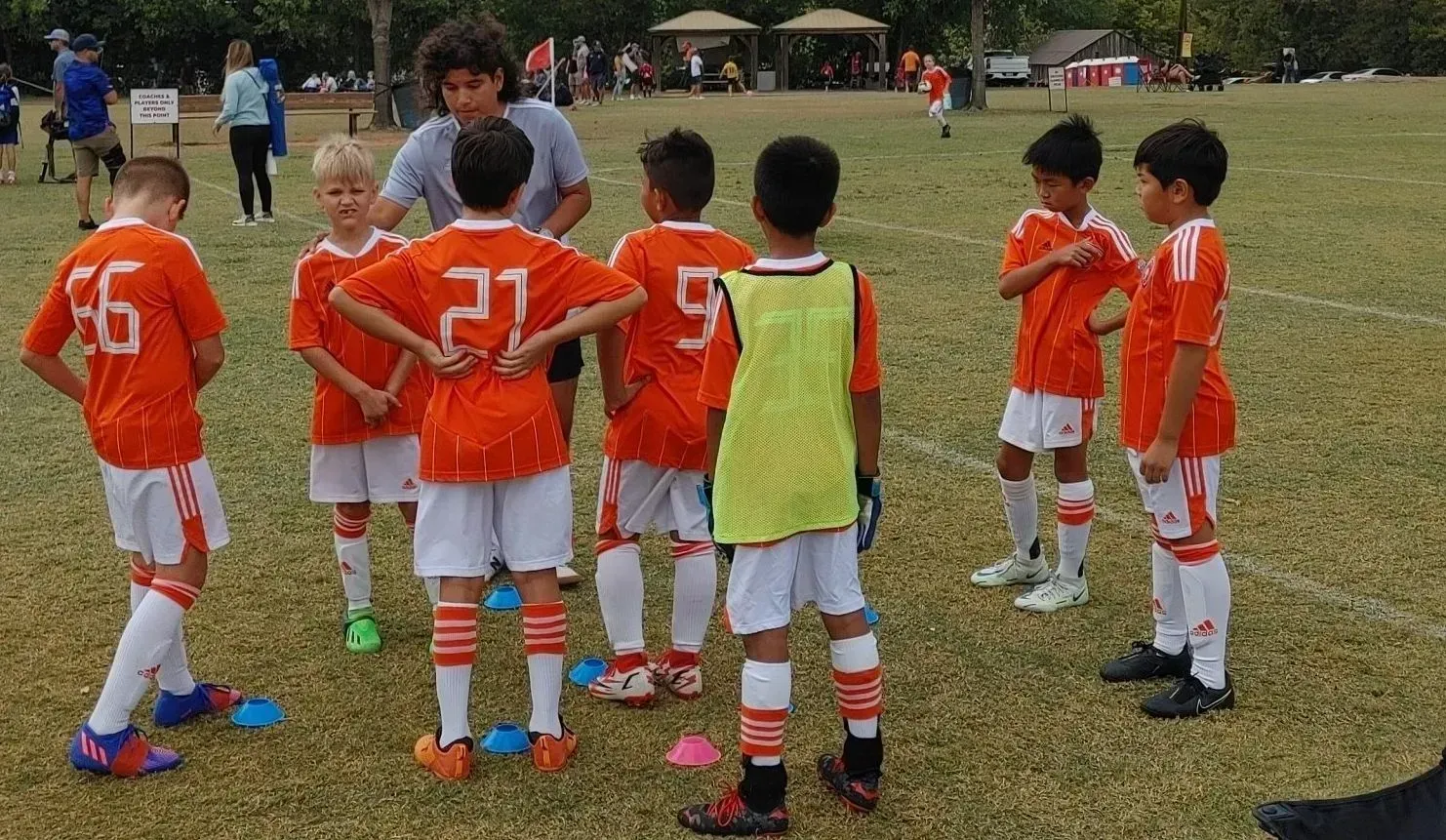
Playing time is the amount of a game a player spends on the field. For young soccer players, the best approach is usually a clear, age-appropriate rotation plan that gives every child meaningful minutes, chances to try different roles, and enough rest to stay engaged.
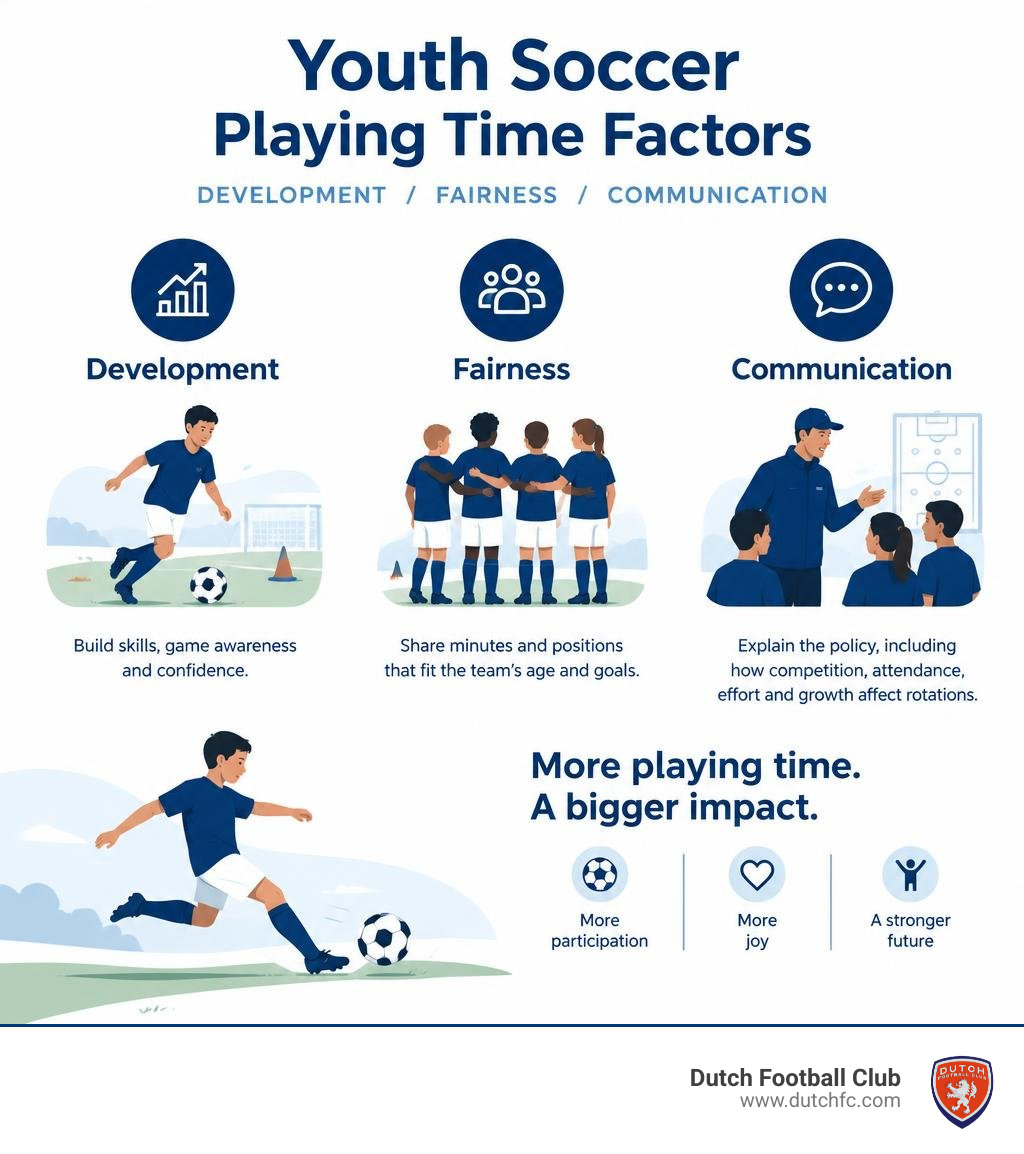
When comparing playing-time options, parents and coaches should look at three things:
- Development: Does the player get enough game action to practice decisions, skills, and confidence under pressure?
- Fairness: Are minutes and positions shared in a way that fits the team's age and goals?
- Communication: Does the club explain its policy before the season, including how competition, attendance, effort, and player growth affect rotations?
This matters because kids value participation more than most adults realize. Nine in 10 children say fun is their main reason for playing sports, and getting into the game is a major part of what makes sports fun. Research also found that 90% of children would rather play for a losing team than sit on the bench for a winning one.
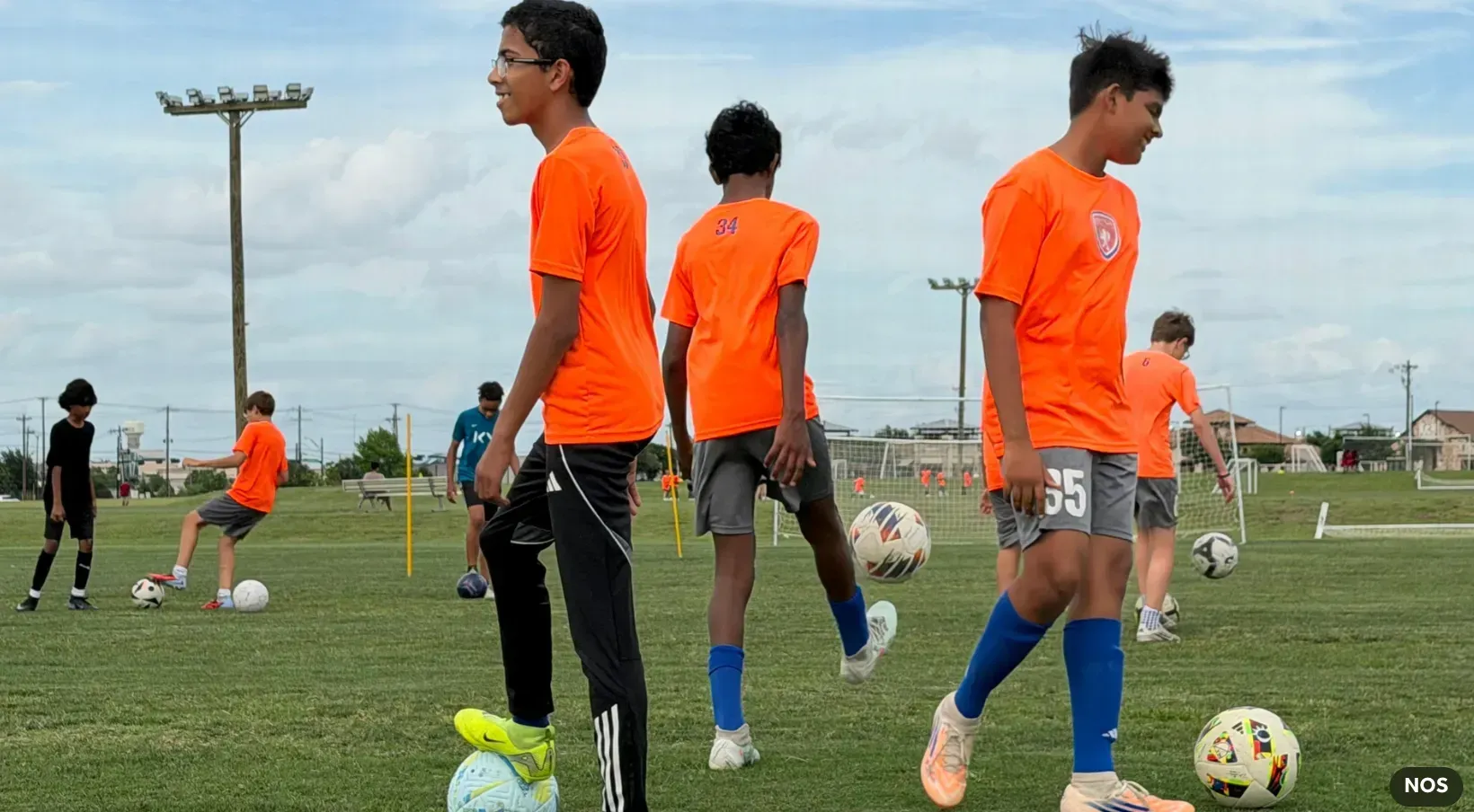
At Dutch Football Club in Frisco, Texas, the goal is not simply to divide minutes with a stopwatch. It is to help players build skill, game awareness, resilience, and a lasting love of soccer while understanding that playing-time expectations can change as competition and age increase.
I am Wilco Ravestijn, a spokesperson for Dutch Football Club in Frisco, Texas, with more than 25 years of experience building organizations and supporting practical development pathways for young athletes. In this guide, I will help parents understand playing time so they can compare programs, ask better questions, and choose an environment that fits their child's goals.
Understanding Playing Time Across Youth and Professional Sports
Across the youth sports landscape, participation numbers have faced a steady decline. Only 37% of children ages 6 to 12 regularly played team sports in recent years, down from 45% in 2008. When youth athletes sit on the sidelines, their connection to the sport quickly dissolves. In fact, roughly 75% of youth athletes drop out of organized sports entirely by age thirteen.
Major governing bodies have created structural mandates to keep young athletes active. Little League Baseball requires that every athlete on a roster play at least six defensive outs and register at least one at-bat per match. Similarly, USA Hockey recommends equal ice time for players 12 and under, allowing tactical adjustments only during the final minute of a one-goal game or for disciplinary reasons.
In youth soccer, modern coaching programs emphasize player growth above short-term results. We see this focus in grassroots philosophy, where understanding our approach to youth soccer playing time helps coaches ensure athletes develop tactical comfort across multiple positions. Furthermore, youth coaches frequently rely on an equal playing time calculator to design balanced rotation schedules that prevent favoritism and account for the Relative Age Effect—where physically mature players born early in the calendar year receive disproportionate match experience over late bloomers.
Physical Demands of Effective Match Duration
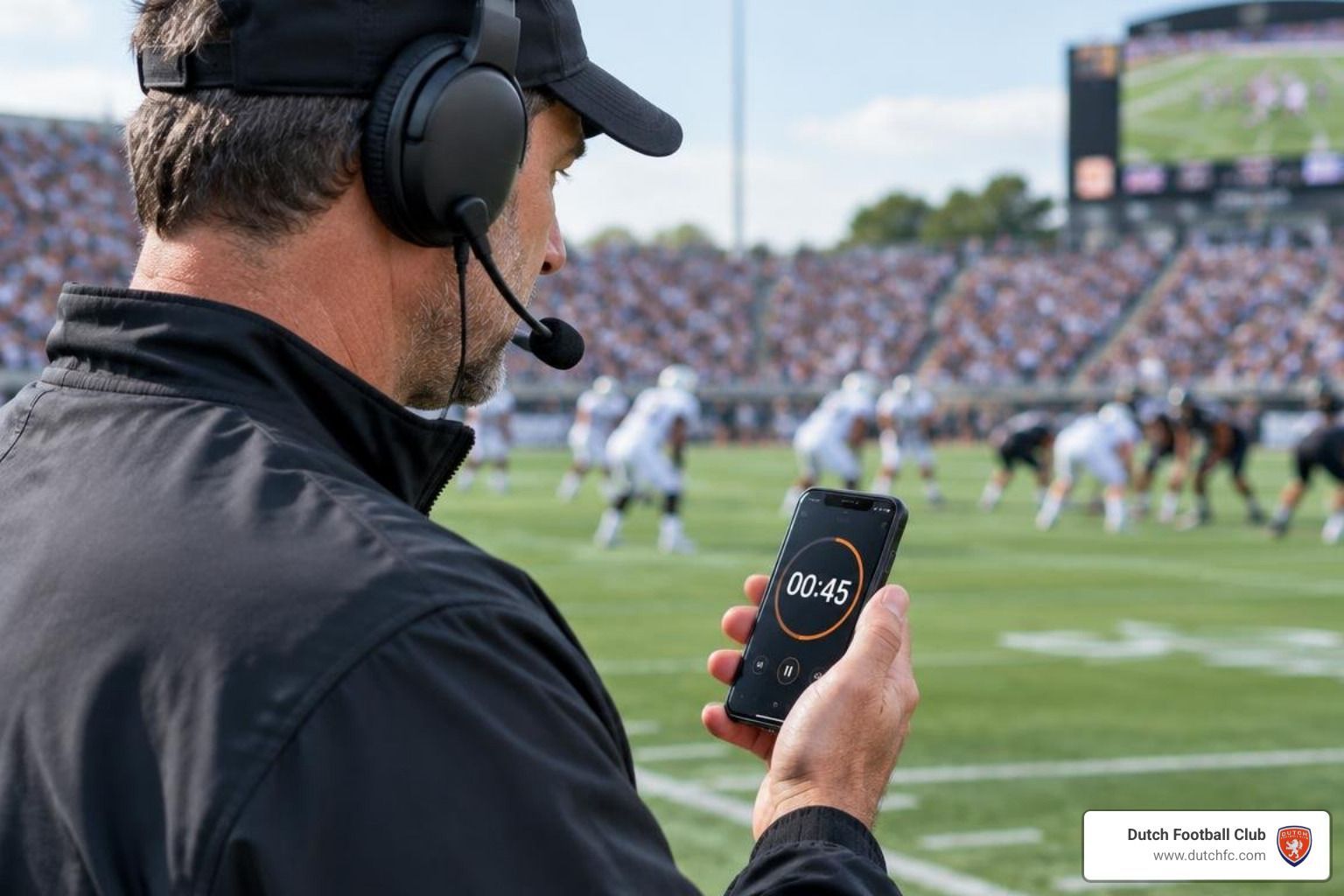
Match time on an official scoreboard does not tell the whole physical story. In elite soccer, tracking systems distinguish between continuous clock time and effective match duration—the actual minutes the ball remains active on the pitch.

A comprehensive physical performance study analyzing top-flight professional matches highlights how match tempo fluctuates based on ball-in-play duration ( Altmann et al., 2023). In the German Bundesliga, effective playing time averages 57.45 ± 4.31 minutes per match, ranging from 47.00 to 70.58 minutes.
When effective time increases beyond 65 minutes compared to matches under 50 minutes:
- Outfield players run approximately 1 kilometer (10%) more total distance.
- Total accelerations increase by 13% (roughly 66 additional explosive bursts).
- Overall sprinting distance drops by 7% to 10% (20 to 30 meters) as athletes manage cumulative fatigue.
These metrics show that physical workload is shaped heavily by how long the ball stays live, requiring smart load management and balanced rotations.
Professional Benchmarks and Minutes Distribution
At the professional level, minutes are managed with surgical precision to optimize physical output and player longevity. Analysts evaluate contributions using per-90 metrics, looking at expected goals (xG), goal differentials (+/-), and points won per match.
Data from the 2024-2025 Premier League Playing Time records demonstrates how elite managers rotate deep squads across 3,240 league minutes to maintain high-intensity pressing and counter-attacking output. In the United States, tracking the 2025 NWSL Playing Time reveals a direct link between squad depth, tactical substitution timing, and late-game defensive resilience.
This focus on load management extends across professional sports. Long-term records like Kevin Durant time played statistics show that even elite basketball superstars see their career averages balanced between 33.4 and 39.5 minutes per game to sustain scoring efficiency over hundreds of appearances.
Evaluating Equal vs Merit-Based Participation Models
Youth soccer clubs balance three primary models: equal allocation, developmental rotation, and strict merit-based selection.
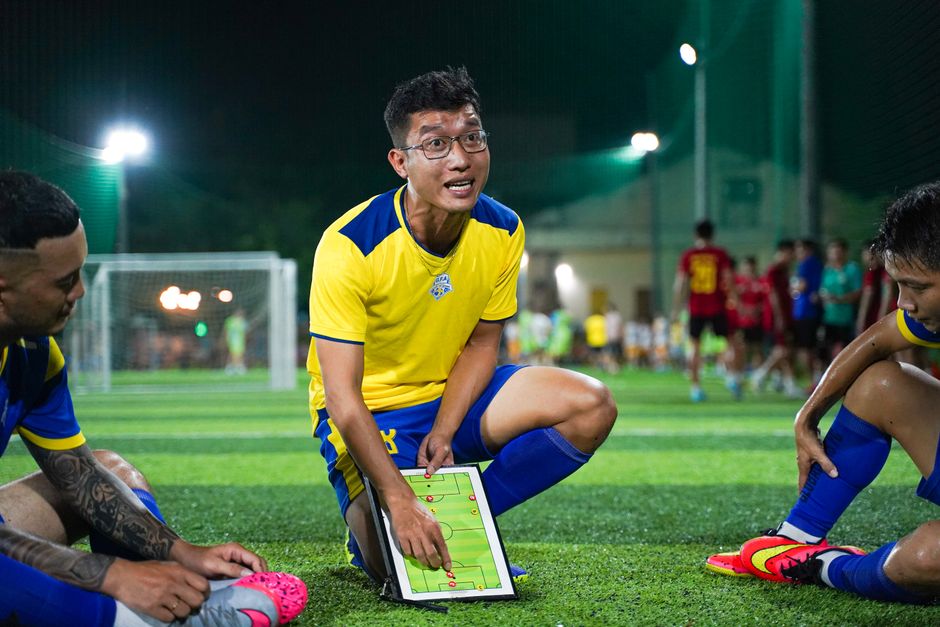
Early in an athlete's journey, developmental rotations prevent burnout and maintain engagement. When coaches prioritize winning trophies at U9 or U10 by benching half the roster, they trigger the 75% dropout rate seen nationwide. Finding the right balance between results vs performance ensures that skill acquisition and decision-making take priority over the final scoreline.
| Model Type | Primary Age Focus | Minute Allocation Strategy | Core Objective |
|---|---|---|---|
| Equal Allocation | U6 to U10 | Strictly equal splits across all games | Fun, fundamental skill exposure, retention |
| Developmental Rotation | U11 to U14 | Guaranteed 50%+ with situational adjustments | Tactical versatility, position learning, growth |
| Merit-Based Model | U15+ & Elite Showcases | Earned minutes based on performance & strategy | Competitive execution, showcase exposure |
Psychological Impact of Playing Time Allocations
Receiving zero minutes in a youth sporting event damages a player's self-esteem and enthusiasm for the sport. When children sit on the bench for an entire match, they often internalize the experience as public rejection, questioning their worth to the team and their relationship with the coach.
Constructive environments treat substitutions as developmental opportunities. Giving every child meaningful minutes builds trust within the squad, fosters resilient locker room chemistry, and prevents the emotional withdrawal that leads young athletes to abandon sports permanently.
International Federation Guidelines and Nordic Models
Nordic sports federations have long championed developmental equity. The Norwegian Federation of Sports mandates that youth sports for children 12 and under operate without discrimination, ensuring equal participation and prohibiting early talent deselection.
Sweden and Denmark enforce similar frameworks, prioritizing long-term physical literacy and psychological well-being. By keeping all players active through age 12, these nations retain a broad base of enthusiastic athletes, producing world-class competitors while maintaining high public health participation rates.
How Coaches Calculate and Implement Fair Rotations
Calculating substitutions on the fly can overwhelm even experienced coaches during a game. Using structured formulas removes guesswork and guarantees equity.
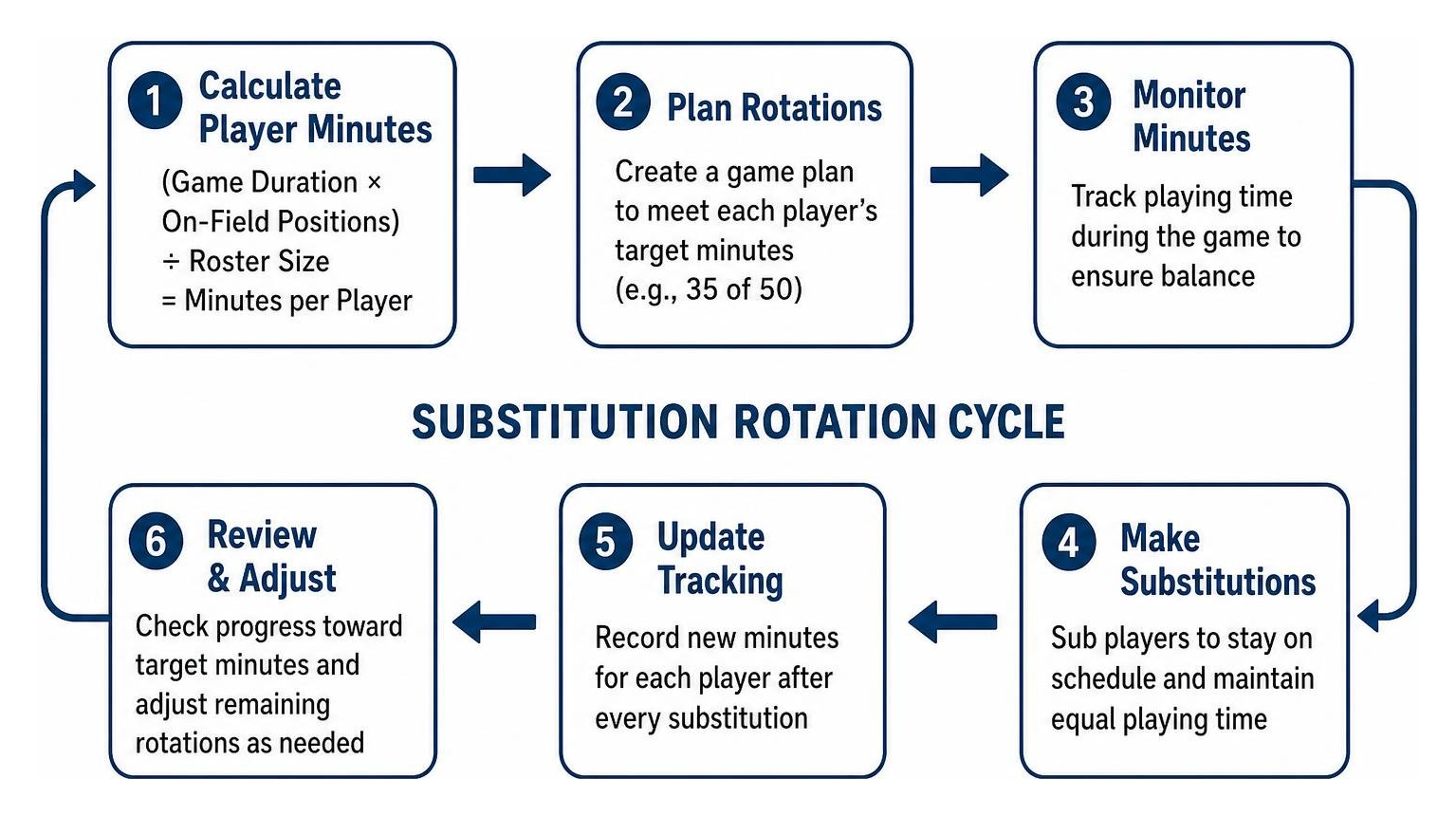
A straightforward formula for individual minute allocation is:
Playing Time per Player = (Total Game Duration × Number of On-Field Positions) ÷ Total Roster Size
For example, in a 50-minute 7v7 match with 10 active players, the team has 350 total player-minutes (50 × 7). Divided evenly among 10 players, each athlete receives exactly 35 minutes of game time and 15 minutes of rest. Coaches can streamline this process using a dedicated playing time calculator before kickoff. For a detailed breakdown of game-day rotation schedules, consult our soccer playing time calculator guide.
Managing Playing Time with Digital Tools
Modern digital management tools simplify on-field rotations through automated interval alerts, real-time bench trackers, and season-long minute audits. Reviewing our playing time calculator guide helps coaches establish consistent 5-minute substitution shifts, smoothly handle late arrivals, and maintain transparent logs that satisfy league minimum requirements.
Player and Parent Strategies for Earning More Minutes
As players enter competitive age groups (U13 and above), earning expanded roles becomes a valuable learning experience. Athletes can build trust with their coaches through reliable habits:
- Proactive Communication: Ask the coach directly, "What specific skill or tactical habit should I focus on in training to earn more game time?"
- Effort in the Details: Sprint on transition recovery runs, communicate loudly on the pitch, and arrive early for warmups.
- Sideline Engagement: Support teammates from the bench rather than sulking, demonstrating a team-first mindset.
Parents also play a crucial role. Sideline shouting or confronting coaches immediately after games often strains relationships and places unnecessary pressure on the child. Following a thoughtful parent-coach communication process and respecting a 24-hour cooling-off rule allows for productive, development-focused discussions.
Frequently Asked Questions about Player Allocations
How much match participation should a youth athlete receive?
Recreational leagues and developmental programs generally mandate at least 50% match participation for all elementary-aged players. For players aged 12 and under, developmental models prioritize balanced allocations across positions to build well-rounded athletic foundations.
What is the difference between clock time and ball-in-play duration?
Clock time is the continuous elapsed game time on the official stadium or referee watch (e.g., 90 minutes). Ball-in-play duration (effective playing time) measures only the minutes when the ball is actively contested, excluding stoppages for fouls, throw-ins, injuries, and goal celebrations.
What steps should players take when struggling with low minutes?
Athletes should seek direct feedback from their coach, maintain high training energy, focus on off-the-ball work rate, and practice patience as they refine technical execution during weekly training sessions.
Conclusion
A development-first mindset builds confident, creative players who stay in the game for life. At Dutch Football Club in Frisco, Texas, our "Total Football" philosophy emphasizes universal technical skill, positional flexibility, and low-cost, high-value player development. By focusing on intentional minutes, clear communication, and balanced growth, we prepare players to thrive at every stage of their athletic journey. Discover our philosophy and explore our competitive pathways in our guide to playing time in club soccer.
References
Altmann S, Forcher L, Woll A, Härtel S. "Effective playing time affects physical match performance in soccer: An analysis according to playing position.." Biology of sport, 2023. PMCID PMC10588592.