
Why a Playing Time Calculator for Soccer Is Every Youth Coach's Best Sideline Tool
A playing time calculator soccer coaches can actually use on the sideline takes the math stress out of one of youth coaching's trickiest jobs: making sure every kid gets a fair shot. Here are the top free tools at a glance:
| Tool | Best For | Cost |
|---|---|---|
| QuickSub Tools | Printable, laminated schedules | Free |
| Lans.cloud | Fixed quarters and round-robin rotations | Free |
| MatchdayIQ | Age-group substitution waves | Free |
| PlayingTimeCalculator.com | Simple web-based planning | Free |
| Game Time Coach | Live in-game tracking | Free to start |
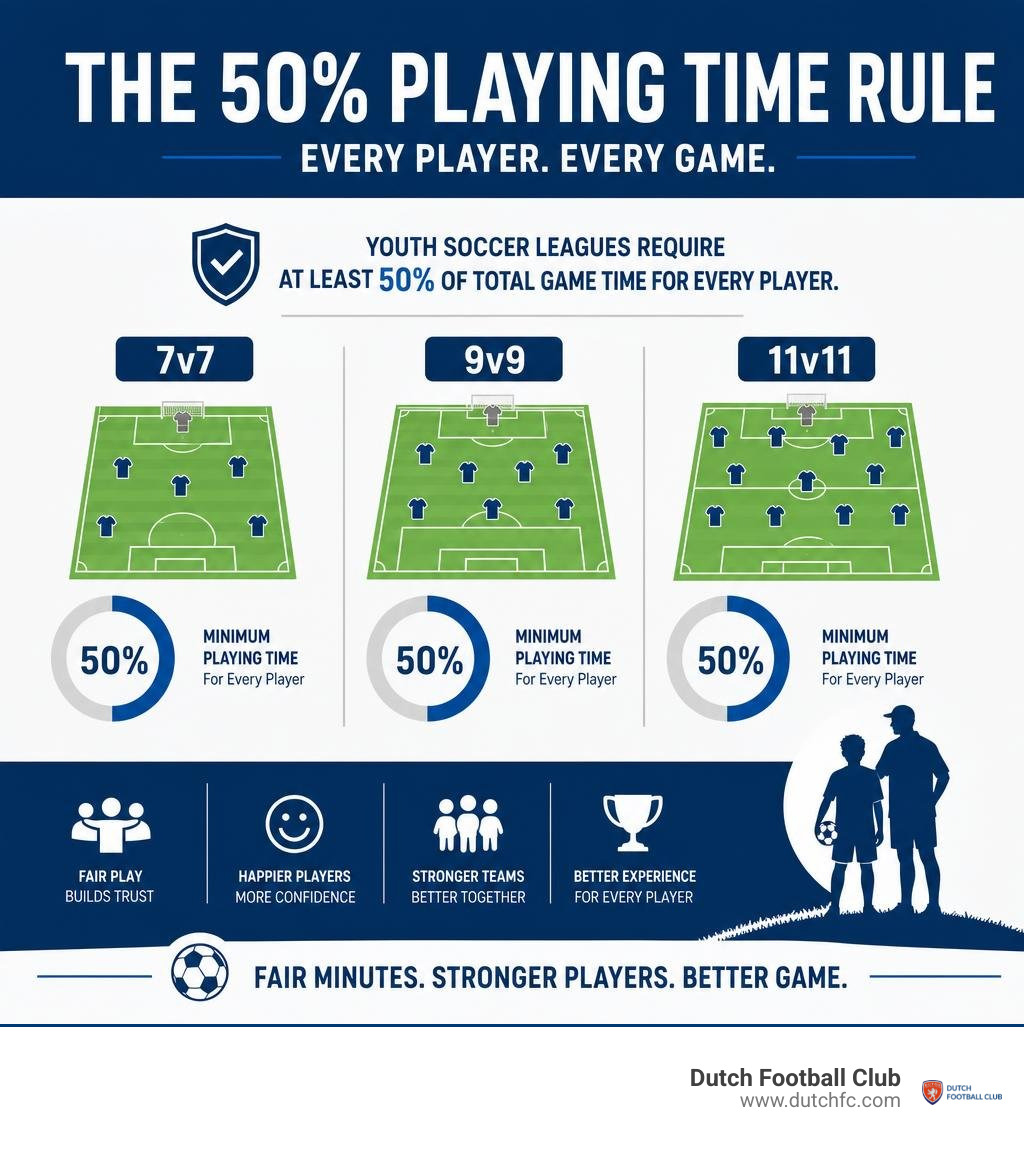
Most youth soccer leagues — including many recreational leagues in Frisco, TX — require every player to get at least 50% of total game time. But knowing the rule and executing it during a game are two very different things. Volunteer coaches are already tracking the score, managing player energy, and fielding sideline questions from parents. Doing rotation math in their head at the same time is where things go wrong.
The good news? The math itself is simple. And free tools now handle all of it automatically — before kickoff and during the game.
I'm Wilco Ravestijn, spokesperson for Dutch Football Club in Frisco, Texas, and with over 25 years of experience in youth development and community-focused programs, I've seen how a reliable playing time calculator for soccer can transform a coach's game-day experience. In this guide, I'll walk you through the best free tools available and the practical strategies behind using them well.
The Math Behind a Playing Time Calculator Soccer Tool
Many volunteer coaches assume that managing equal play is an art form. But as the saying goes on the pitch: fair minutes aren't an art, they're arithmetic.
To understand how a playing time calculator soccer tool operates under the hood, we first need to look at how different game formats, roster sizes, and match lengths interact. Every extra player on your bench exponentially reduces the average minutes available for the active players on the field.
| Format | Match Duration | Roster Size | Target Play Time Per Player | Target Bench Time Per Player | Suggested Sub Interval |
|---|---|---|---|---|---|
| 7v7 (U8-U10) | 50 Minutes | 9 Players | ~39 Minutes | 11 Minutes | 7–8 Minutes |
| 7v7 (U8-U10) | 50 Minutes | 10 Players | 35 Minutes | 15 Minutes | 5 or 8 Minutes |
| 7v7 (U8-U10) | 50 Minutes | 12 Players | ~29 Minutes (Target: 27-31) | 21 Minutes | 6–8 Minutes |
| 9v9 (U11-U12) | 60 Minutes | 12 Players | 45 Minutes | 15 Minutes | 10–12 Minutes |
| 9v9 (U11-U12) | 60 Minutes | 13 Players | 41.5 Minutes | 18.5 Minutes | 8–10 Minutes |
| 11v11 (U13+) | 50 Minutes | 14 Players | ~39 Minutes | 11 Minutes | 10–12 Minutes |
| 11v11 (U13+) | 70 Minutes | 14 Players | 55 Minutes | 15 Minutes | 12–15 Minutes |
At the recreational level, a 15-minute bench equilibrium is often the sweet spot. It is long enough to give a winded player a genuine physical rest, yet short enough that they do not lose their connection to the flow of the match or feel excluded.
How to Calculate Equal Playing Time in Youth Soccer
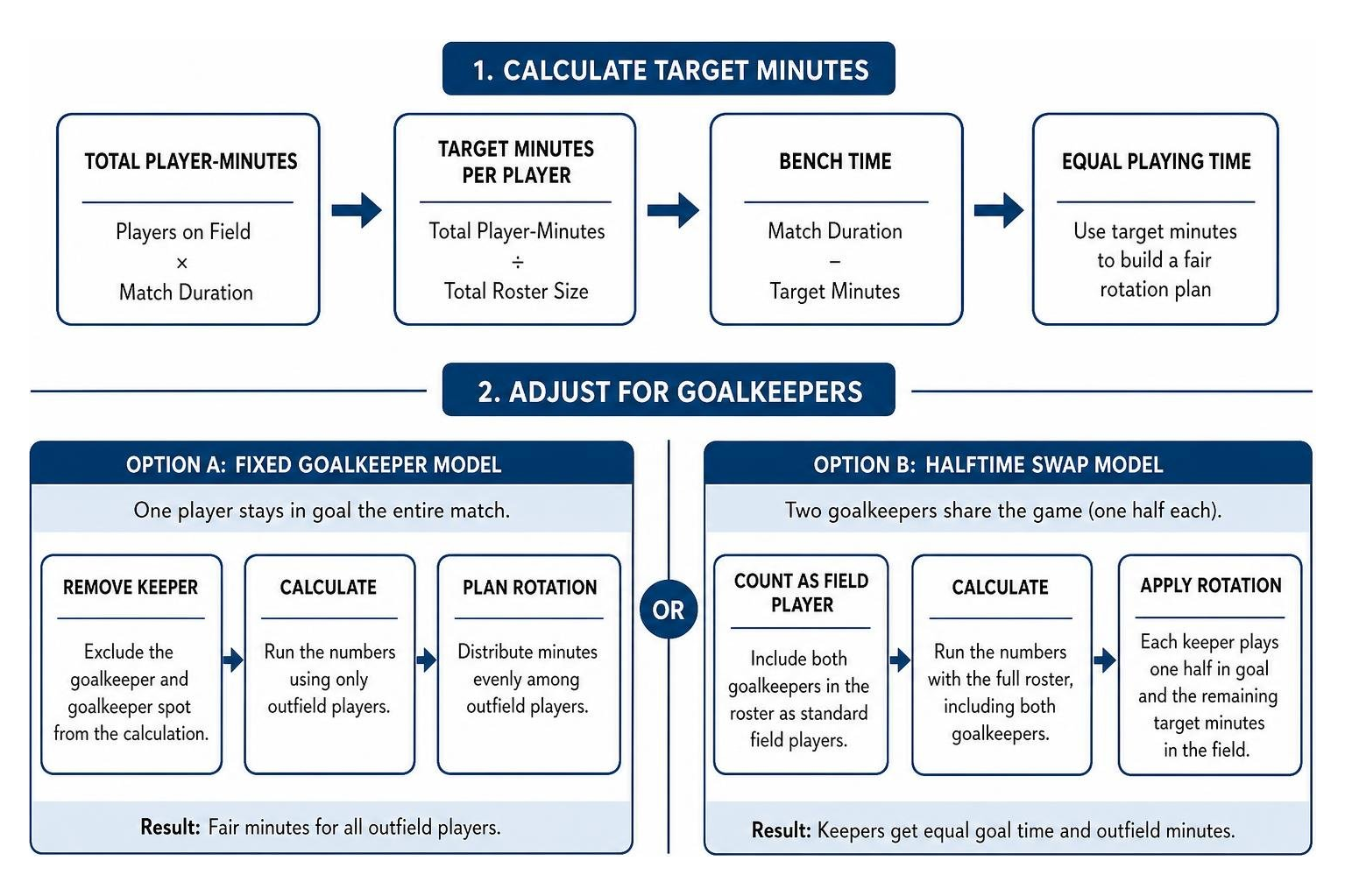
If you ever find yourself on a rain-soaked field without access to a smartphone, you can calculate these numbers manually. The core mathematical formula is straightforward:
Total Player-Minutes = Players on the Field × Match Duration
Target Minutes Per Player = Total Player-Minutes ÷ Total Roster Size
Let’s look at a concrete example. Suppose we are coaching a U10 team playing a 7v7 format in a 50-minute match with 10 players present:
- Total Player-Minutes: 7 (players on the field) × 50 (minutes) = 350 total minutes.
- Target Minutes Per Player: 350 ÷ 10 (rostered players) = 35 minutes of play time per child.
- Bench Time: 50 (match length) - 35 (play time) = 15 minutes on the bench.
If your roster swells to 12 players for that same 7v7 match, the math shifts:
- Total Player-Minutes: 7 × 50 = 350 total minutes.
- Target Minutes Per Player: 350 ÷ 12 = 29.2 minutes per player.
Adding just two extra bench players drops each child's playing time by nearly six minutes. To make planning these shifts effortless, we highly recommend using a dedicated online resource like the Free Soccer Equal Playing Time Calculator & Tracker, which outputs precise rotation schedules in seconds.
Adjusting the Playing Time Calculator Soccer Formula for Goalkeepers
One of the most common mistakes coaches make when using a basic calculator is treating the goalkeeper as a standard outfield position. Goalkeepers rarely sub out mid-half, which means if you include them in the general pool, your outfield players will end up with skewed, uneven minutes.
To solve this, you must decide on your goalkeeper strategy before running the numbers:
- The Fixed Goalkeeper Model: If one player plays the entire game in goal, remove them and the goalkeeper position from the calculation. For a 9v9 game with a 13-player roster, you would calculate an 8v8 game (excluding the keeper) for 12 outfield players.
- The Halftime Swap Model: At the youth level, we love rotating keepers. If two players share goalkeeper duties (one half each), you can treat the goalkeeper position as a standard field spot. Each keeper gets 25 or 30 minutes in goal and their remaining target minutes as an outfield player.
For a deeper dive into adjusting your team's rotation patterns around your keepers, check out the insights provided by the Soccer Playtime Calculator: Split Minutes Evenly | Game Time Coach.
Top Free Soccer Rotation and Substitution Calculators
When you are managing a busy sideline, you do not want to be squinting at a complex spreadsheet. You need a clean, intuitive tool that does the heavy lifting for you. We have reviewed the top free options available in July 2026 to help you find the right fit for your coaching style.
QuickSub Tools: Best for Printable Lineup Sheets
If you prefer a physical clipboard over a smartphone screen during games, Free Soccer Substitution Calculator | Equal Playing Time Calculator 2025 | QuickSub Tools is an exceptional choice.
This free web tool allows you to input your roster size (supporting 6 to 30 players) and select standard youth formats from 5v5 up to 11v11. You can group players by preferred positions (defense, midfield, attack) and set rules to exclude certain players from rotating into specific spots.
Once generated, the tool provides a highly visual timeline of exactly who is on the field and who is on the bench for every single shift. We recommend printing this schedule out and laminating it. It keeps the paper dry on rainy mornings and allows you to cross off completed shifts with a dry-erase marker.
Lans.cloud: Best for Fixed-Time Quarters and Round-Robin Rotations
Many local leagues mandate substitutions at fixed intervals, such as quarters. When perfect mathematical equality is impossible due to roster sizes, the Equal Playing Time Calculator — Free, Fair Sub Schedules | lans.cloud shines.
Lans.cloud uses a smart round-robin algorithm to build the closest possible rotation, ensuring that every single player is within one shift of everyone else. To eliminate sideline confusion, the tool allows you to assign roster numbers to players.
Instead of shouting complex names, you can simply call out "threes off, sixes on!" This prevents players from negotiating or arguing on the sideline and keeps your transition windows incredibly tight.
MatchdayIQ: Best for Age-Group Specific Substitution Waves
If you are coaching across multiple age brackets, Youth Soccer Playing Time Calculator | Free Tool — MatchdayIQ | MatchdayIQ is a fantastic, structured resource. It features built-in presets for U8-U10 (7v7), U11-U12 (9v9), and U13+ (11v11) matches.
MatchdayIQ organizes substitutions into "waves" rather than individual player swaps. For example, in a 9v9 game with 13 players, instead of making four separate single substitutions, the tool plans two structured waves per half where 2-3 players swap out at once. This preserves the tactical shape of your team, prevents game flow disruption, and makes it much easier for the players on the field to maintain their defensive and attacking partnerships.
PlayingTimeCalculator.com: Best for Simple Web-Based Planning
For coaches who want a no-nonsense, clean interface without any learning curve, the beta - Playing Time Calculator is perfect.
This tool is designed for fast, pre-game configuration. You simply enter your total roster, active players, and game duration, and choose between modes like "Auto Fairness" or "Equal Shifts." It is lightweight, loads instantly on any mobile browser at the field, and gives you a clear, scrollable game plan that you can screenshot and save to your camera roll before kickoff.
Best Practices for Managing Soccer Substitutions on Game Day
Having a great tool is only half the battle. Executing those rotations smoothly while keeping your players engaged and parents happy requires a systematic approach to sideline organization.
Using a Playing Time Calculator Soccer App for Live Tracking
While pre-game planning is essential, live matches rarely go exactly as planned. Using a mobile app with a built-in game-day timer can keep you perfectly on track.
Many modern tracking apps feature audible warning countdowns (beeping at 3, 2, and 1 minutes before a shift change). This allows you to keep your eyes on the match rather than constantly checking your stopwatch.
Sideline Tip: Do not try to run the timer, coach the players, and manage the subs all by yourself. Delegate the timer and substitution clipboard to an assistant coach or a trusted parent volunteer. This frees you up to focus entirely on tactical feedback and positive reinforcement.
Handling Late Arrivals, Early Departures, and In-Game Injuries
Every youth coach has faced the sudden panic of a player arriving ten minutes late or needing to leave early for a family commitment.
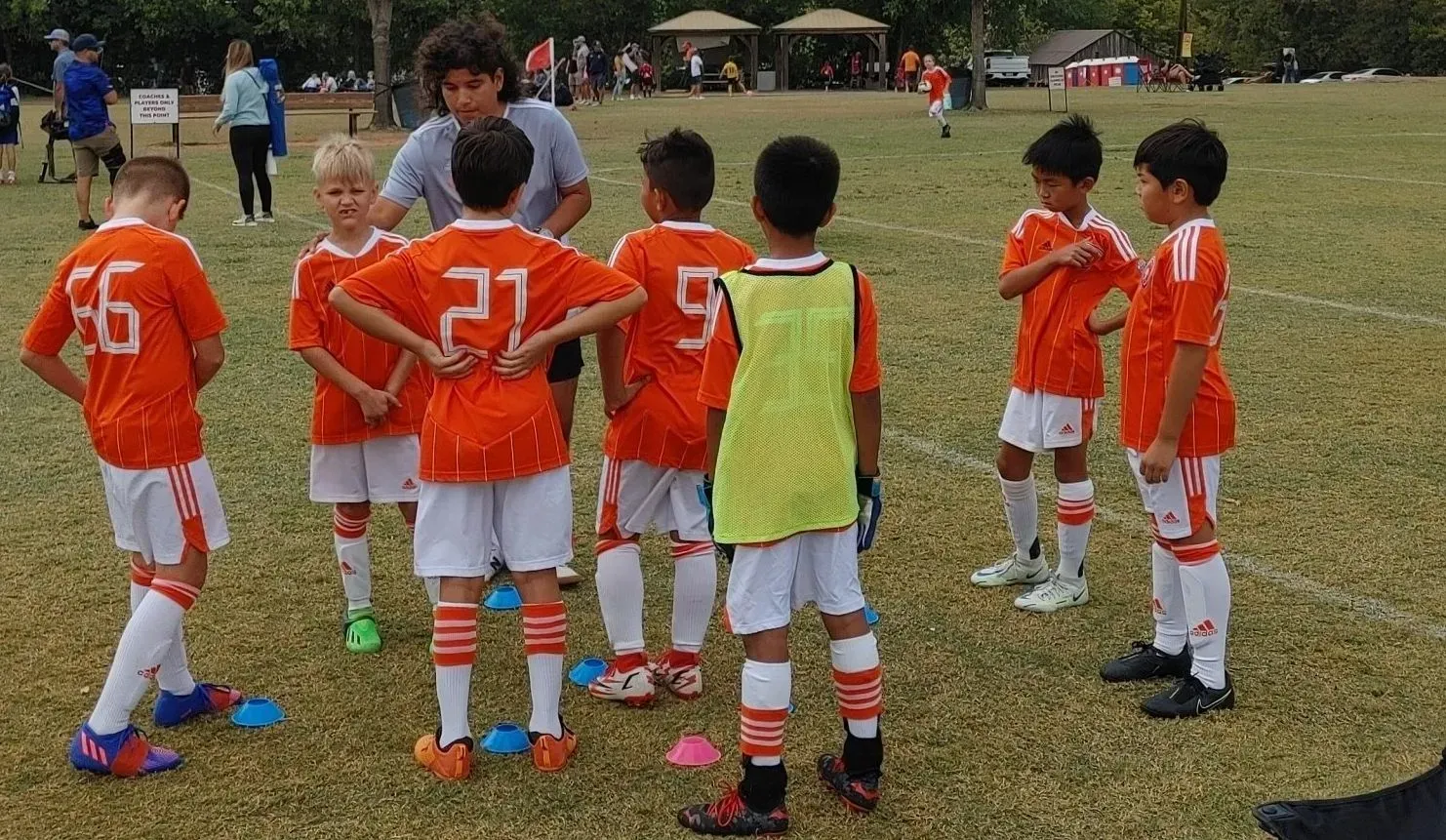
When this happens, do not abandon your fair-play goals. Use the manual override features on your calculator app to temporarily adjust your roster size. If a player is injured, pause their rotation rotation sequence and split their remaining minutes evenly among the rest of the bench.
Player safety and well-being always come first. If a player is exhausted or struggling with the heat, make an unscheduled substitution and balance the minutes out in the next half or during the following week's match.
Communicating Rotation Plans and League Policies to Parents
The dreaded "stopwatch parent" is a well-known sideline character in youth sports. Often, parent frustration stems simply from a lack of transparency.
We highly recommend emailing your rotation plan or sharing a screenshot of your calculated schedule in the team chat before game day. When parents see that you have a mathematically balanced system, complaints vanish.
It is also vital to align parent expectations with the specific type of program your child is participating in. As we discuss in our A Comparison Guide of Club, School, and Recreational Soccer Programs, recreational leagues prioritize strictly equal play, while competitive select programs may use a 40-50% minimum standard to balance development with competitive performance.
Frequently Asked Questions about Soccer Playing Time
How often should youth soccer coaches substitute players?
For younger players in 7v7 formats, we recommend substitution windows of 6 to 10 minutes. In 9v9 formats, 8 to 12 minutes is ideal, while older 11v11 teams generally benefit from longer, more intentional 12 to 15-minute shifts.
Shorter windows are excellent for maintaining high energy levels, coping with hot weather, and keeping younger children focused. However, subbing too frequently can disrupt team chemistry. Finding the right balance ensures your players can settle into the game while staying physically fresh. This balance is key to keeping the focus on long-term growth rather than short-term scorelines, a concept we explore in Results vs Performance: The False Choice in Youth Soccer.
What is a fair playing time policy for youth soccer leagues?
For elementary-aged players in recreational leagues, a strict 50% minimum playing time policy should be mandated and enforced. At Dutch Football Club, we believe that early youth sports should focus entirely on skill acquisition, spatial awareness, and fostering a lifelong love for the game.
Ensuring every child gets ample time on the pitch builds the confidence and character they need to succeed both on and off the field. We view youth sports as a powerful vehicle for character development, which we outline in our coaching philosophy, the Game Plan for Life.
How do you handle goalkeeper minutes when calculating playing time?
At the U8 to U12 levels, we strongly advocate for rotating goalkeepers. No single player should be pigeonholed into the net permanently.
A fantastic approach is to have two players split goalkeeper duties each half. For the half they are not in goal, they should play as outfield players, rotating through your standard substitution plan. This ensures they receive specialized goalkeeper training while still developing the foot skills, tactical vision, and physical conditioning that only outfield play can provide.
Conclusion
At Dutch Football Club in Frisco, Texas, our development model is deeply rooted in the famous Dutch "Total Football" philosophy. This system relies on versatile, well-rounded players who understand how to pass, move, and occupy different positions on the field. You cannot build versatile players if they are spending half the season sitting on the bench.
Using a playing time calculator soccer tool is more than just a way to keep parents happy; it is a fundamental pillar of effective player development. When every child knows they will get a fair, guaranteed opportunity to play, they train harder, play with more freedom, and develop a deeper connection to the game.
If you are looking for a high-value soccer environment that balances elite skill development with a structured, fair approach to player growth, we invite you to explore our programs. To learn more about how we manage player development and squad rotations across our select and academy teams, read our comprehensive guide on Playing Time in Club Soccer.