
Write a Respectful Letter About Playing Time
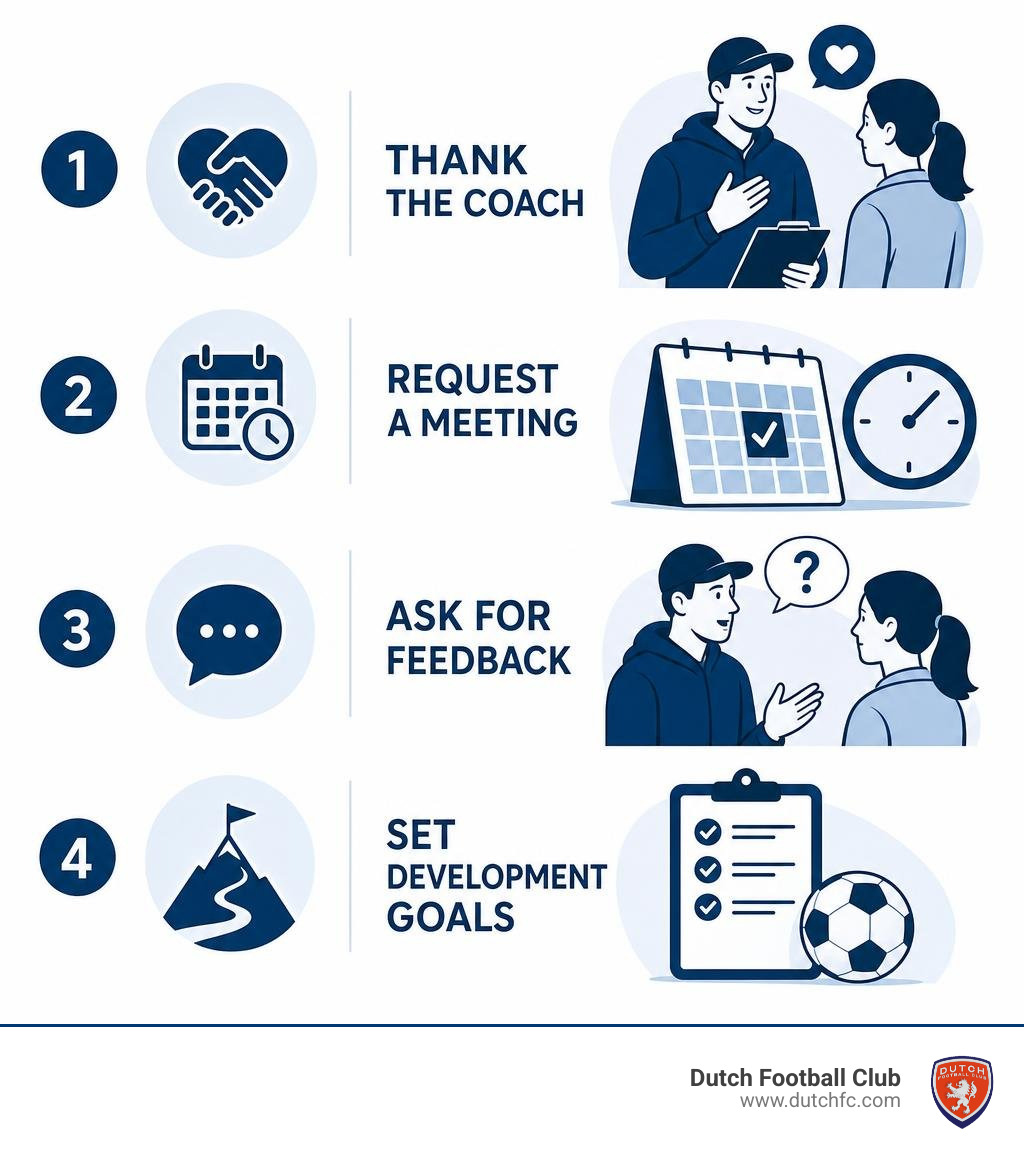
A letter to coach from parent about playing time should not demand more minutes. It should politely request a short conversation, explain that your child's development and enjoyment are the priority, and ask what they can improve.
Keep the first message brief:
- Thank the coach for their time and effort.
- Ask for a convenient time to talk privately.
- Say you want to understand your child's role and development goals.
- Avoid comparing your child with teammates or debating decisions by email.
Before you send anything, talk with your child. Are they upset about sitting out, or are you carrying the frustration? A player who still enjoys practice and feels connected to the team may not need a parent-coach meeting. But if limited minutes are hurting confidence, enjoyment, or chances to learn, a calm conversation can help uncover the reason and create a practical next step.
I am Wilco Ravestijn, a youth soccer development leader with more than 25 years of experience in business and community-focused programs. At Dutch Football Club, I help families approach a letter to coach from parent about playing time with clarity, respect, and a focus on the player's long-term growth.
Step 1: Assess the Situation Before Contacting the Coach
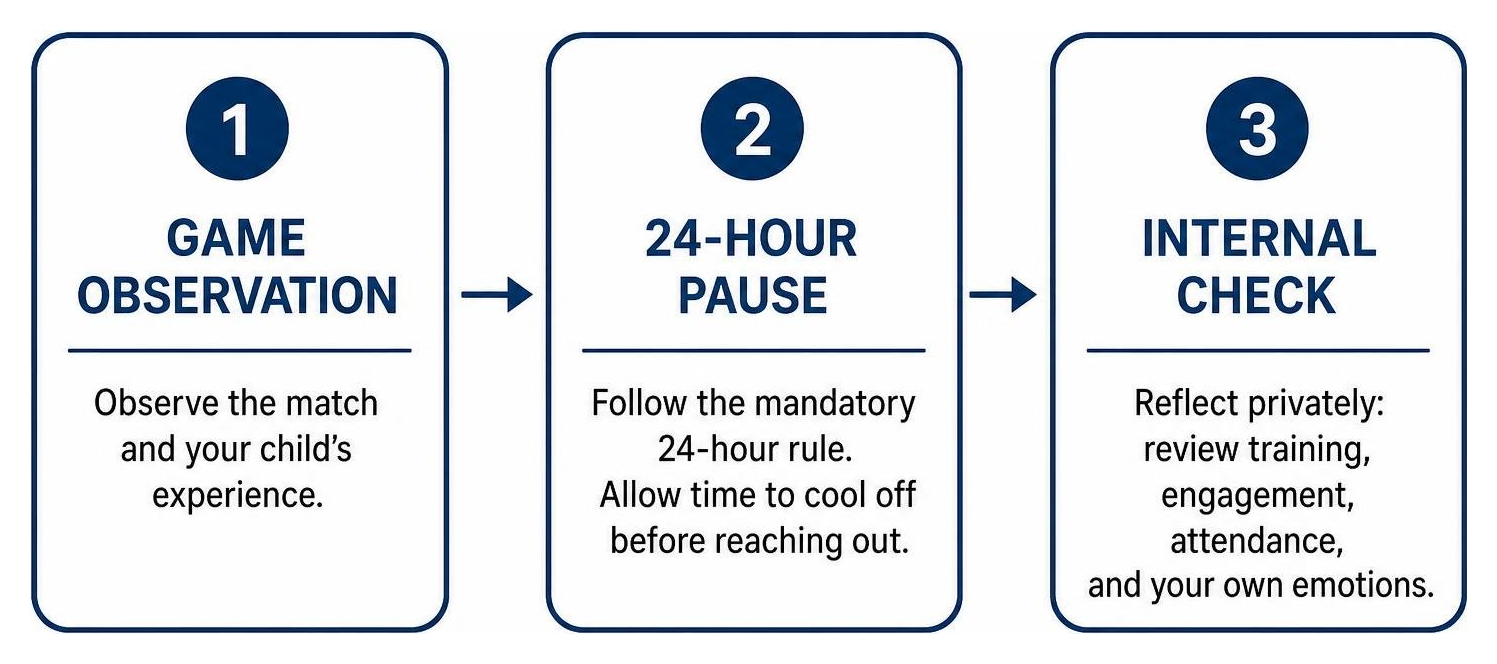
Sitting on the sideline while watching your child ride the bench triggers an immediate protective reaction. It is easy to draft a heated message in your head right from the parking lot. However, taking a step back for self-reflection before emailing is critical.
Almost 50% of youth coaches report experiencing verbal harassment from parents, creating defensive barriers before a conversation even starts. When we pause, observe, and regulate our initial emotions, we create an environment where the coach can actually listen.
Always observe the mandatory 24-hour rule after a match before opening your email app. High-adrenaline environments rarely produce productive dialogue. Use this cooling-off window to evaluate what is happening during midweek training sessions.
Has your child missed practices due to minor illnesses, academic obligations, or travel? Are they fully engaged during drills, or are they losing focus during tactical walkthroughs? Coaches base their matchday lineups heavily on what happens during training hours.
Determining Whose Frustration It Really Is
Before you take on the role of advocate, find out where the frustration truly lies. We often bundle our own hopes, financial investment, and protective instincts into our child’s athletic experience.
Ask yourself:
- Does my child come off the field smiling and eager to grab a post-game snack, or are they visibly withdrawn?
- Does my child bring up their minutes naturally, or am I prompting them with leading questions on the car ride home?
- Is my child energized by practice sessions throughout the week?
Children often view sports through a lens of social connection, play, and personal milestones. Parents, on the other hand, often evaluate matches through fairness, value for money, and competitive standing. If your athlete is engaged, supportive on the bench, and excited for the next session, the lack of minutes might be your frustration rather than theirs.
Understanding the developmental expectations around youth soccer playing time helps align parental perspective with age-appropriate milestones.
Healthy Resilience vs. Developmentally Damaging Bench Time
Youth sports serve as an incredible classroom for teaching resilience, but there is a distinct boundary between character-building adversity and developmentally harmful benching.
Facing competition, learning to earn minutes, and understanding tactical roles build mental toughness. When an athlete realizes they need to improve their first touch or increase their work rate, the bench becomes a motivator.
However, when a player under the age of 14 consistently receives minimal minutes across multiple games without actionable feedback, confidence drops quickly. Without on-field game time, skill execution stagnates.
When sports induce acute anxiety or cause a child to beg to skip training, the environment ceases to be developmental. A letter or thoughtful email is warranted to ensure the sporting environment remains psychologically safe and positive.
Step 2: Establish the Right Messenger Based on Player Age

Before drafting any message, determine who should lead the conversation. As players mature, learning to advocate for themselves becomes far more valuable than having a parent step in to solve every challenge.
Player-Led Conversations for Middle and High School Athletes
By the time athletes enter middle school and approach high school (roughly ages 12 to 14 and older), they should be the primary voice communicating with the coaching staff. Encouraging your teenager to speak directly with their coach fosters leadership, accountability, and maturity.
Help your athlete prepare by rehearsing simple, respectful questions at home:
- "Coach, what specific skills or tactical habits do I need to improve during practice to earn more game time?"
- "I want to contribute more on the field. What are two things you'd like to see from me in our next training session?"
- "Can you show me where I need to improve my positioning during our phase-of-play drills?"
Using sports as a vehicle to develop self-reliance gives athletes a game plan for life that extends far beyond the pitch.
When Parental Presence Is Necessary
For younger athletes (U11 and below), parents naturally need to guide communication. Children at this stage rarely possess the vocabulary or emotional maturity to navigate tactical discussions with an adult authority figure.
Parental involvement is also necessary if:
- The athlete attempted to speak with the coach and was dismissed or given confusing feedback.
- There are underlying medical, physical growth, or mental health concerns.
- You suspect bullying, systemic exclusion, or unsafe practices.
When you do step in for an older child, attend the meeting as a supportive facilitator rather than the lead speaker. Sit alongside your player, let them open the discussion, and offer gentle reinforcement when needed.
How to Draft a Letter to Coach from Parent About Playing Time
When writing to a coach, your objective is not to debate tactical selections over email. Your goal is simply to secure a private, calm conversation. Coaches spend hundreds of hours each season organizing drills, managing equipment, and planning sessions. Acknowledging their commitment sets a collaborative tone.
Understanding the structural differences outlined in a comparison guide of club, school and recreational soccer programs helps you frame your note in the right competitive context.
Sample Letter to Coach from Parent About Playing Time for Younger Athletes
Use this straightforward template when initiating contact regarding a younger player:
Subject: Meeting Request regarding Alex's Development
Dear Coach Smith,
I hope you are having a great week. Thank you for your continued dedication to the team and for the hard work you put into organizing our practice sessions.
Alex is really enjoying being part of this group and loves playing with the team. We want to ensure we are supporting their development at home in the best way possible.
Would you have 10–15 minutes before or after a training session next week (or over the phone) to discuss Alex's development? We would love to get your thoughts on specific areas where they can improve their skills and confidence.
We appreciate your guidance and look forward to speaking soon.
Best regards,
Sarah Jenkins
Follow-Up Letter to Coach from Parent About Playing Time and Development Goals
Once you have held an in-person meeting and established goals, a brief follow-up note locks in mutual accountability and shows respect for the coach's time:
Subject: Thank You & Follow-Up – Alex's Development Goals
Dear Coach Smith,
Thank you for taking the time to speak with me on Tuesday. I really appreciate your honesty regarding Alex's progress.
We have discussed the specific goals you highlighted—especially improving first-touch control under pressure and tracking back defensively. We are setting up extra practice drills at home to target these areas.
Please let us know if you see positive adjustments over the coming weeks or if there are other areas we should focus on. Thanks again for everything you do for the players.
Warm regards,
Sarah Jenkins
Critical Pitfalls to Avoid in Written Communication
To ensure your email leads to a productive outcome, avoid these common communication traps:
- Comparing Your Child to Teammates: Never mention other players by name. Asking "Why is Tommy playing center-back when my son is faster?" immediately puts the coach on the defensive and damages team culture.
- Debating Tactics or Formations: Avoid critiquing match strategies or substitution patterns. Stick strictly to your child's personal growth and mindset.
- Hitting Send While Emotional: If you feel anger or resentment, wait another 24 hours. Emails leave a permanent record and can inadvertently impact your child's standing on the team.
- Demanding Guaranteed Minutes: In competitive environments, playing time is earned through development, effort, and execution. Frame all requests around improvement rather than entitlement.
Step 3: Diagnostic Questions to Ask During the Meeting

When you sit down with the coach, enter the conversation with curiosity rather than an agenda. Treat the coach as an educator and partner. By asking open-ended, diagnostic questions, you will discover the underlying factors governing their lineup choices.
Uncovering the Root Cause of Limited Minutes
To gain actionable insights, use these targeted diagnostic questions:
- Technical Skill: "What specific technical fundamentals (passing accuracy, first touch, weak-foot ability) does my child need to sharpen to compete at this level?"
- Tactical Understanding: "How well is my child executing their positional responsibilities during transition moments in practice?"
- Physicality and Conditioning: "Is my child struggling to keep up with the physical pace, stamina, or speed of play during the second half of games?"
- Mindset and Work Ethic: "How does my child respond to adversity, instruction, and communication during training drills?"
Coaches track various metrics across training and games. Reviewing our soccer playing time calculator guide can give you useful perspective on how coaching staffs evaluate rotation cycles and calculate balanced match minutes.
Navigating Roster Shifts and Level Recommendations
During your meeting, a coach may suggest that your child is currently overmatched in their current bracket and might benefit from playing with a lower-tier squad or guest-playing in a different division.
While this feedback can feel discouraging at first, it is often the healthiest step for long-term player development. Being the top player on a developmental team—getting 80% playing time, taking set pieces, and driving the offense—builds technical mastery far faster than playing 10% of minutes on an elite roster where a player is terrified of making a mistake.
At Dutch Football Club, we manage player mobility through the squad system, which ensures players train in fluid, developmentally appropriate tiers where they can earn game minutes without losing confidence.
Step 4: Supporting Your Athlete After the Discussion
The meeting with the coach is only half the equation; the most impactful work happens during your ride home and around the dinner table with your child.
Processing Hard Feedback and Building an Action Plan
If the coach shared tough feedback regarding conditioning, technical gaps, or focus, frame it positively for your athlete:
- Validate Emotions: Acknowledge that hearing areas of weakness can be difficult, but remind them that every elite player works through these exact challenges.
- Break It into Small Goals: If the coach noted weak-foot passing as a weakness, set up a 15-minute daily wall-pass routine at home.
- Praise Effort Over Outcomes: Keep the conversation focused on work ethic rather than whether they started the last match.
Recognizing the balance between results vs performance: the false choice in youth soccer helps young athletes prioritize mastery over short-term match results.

Maintaining Long-Term Perspective on Athlete Growth
An athlete’s youth sports journey is a marathon, not a sprint. A single season of low minutes does not define a player's long-term potential. Growth spurts, cognitive maturation, and sudden leaps in technical confidence happen at different ages for every child.
Keep sports fun, keep pressure low, and celebrate the small personal victories that happen away from the scoreboard. When players retain their intrinsic love for the sport, they stick with the game long enough to develop genuine mastery.
Frequently Asked Questions About Communicating with Coaches
What is the 24-hour rule before sending an email to a coach?
The 24-hour rule is a standard youth sports communication policy requiring parents to wait a full day after a game before contacting coaches about decisions, minutes, or tactics. This cooling-off period prevents emotional confrontations and ensures that conversations remain objective, calm, and focused on player development.
How should a parent react if a coach ignores a request to talk?
If a polite email request goes unanswered for 4 to 5 business days, send a friendly follow-up note confirming they received the original message. If the coach continues to ignore communication, reach out to the club’s Director of Coaching or the school’s Athletic Director to request a structured meeting.
Does equal playing time apply to competitive travel teams?
No. While grassroots and recreational programs often enforce equal-minute rules, competitive select and academy teams allocate minutes based on skill, commitment, tactical fit, and practice performance. However, competitive development models should still prioritize meaningful match exposure for every rostered player to ensure long-term development.
Conclusion
Navigating youth sports requires balancing emotional support with realistic developmental benchmarks. Writing a polite, constructive email to your child's coach is an effective way to turn confusion into a clear plan of action. Keep the focus entirely on growth, encourage your athlete to self-advocate whenever age-appropriate, and view the coach as a partner in teaching life lessons.
If you want to understand how holistic development and structured rotation policies work in competitive environments, read our complete guide to playing time in club soccer.