
How to Calculate Fair Rotation Minutes and Shift Formulas
Calculating fair minutes by hand in the middle of a game is an unnecessary headache. Sideline math often goes sideways when substitutions happen on the fly, leading to unintended imbalances where some players get excessive time while others sit on the bench freezing.
To avoid this, coaches rely on a fundamental mathematical formula to establish baseline playing time before stepping onto the pitch.

The calculation begins by determining the total pool of available player-minutes across the match. You calculate this by multiplying the total match duration by the number of active field positions. Once you have the aggregate player-minutes, divide that sum by the total number of players present on your squad roster.
You can review our complete guide on youth soccer playing time standards to see how developmental policies align with these formulas. For general mathematical applications, you can explore the playing time mathematical formula to calculate per-player minutes across diverse team sports.
When the squad size does not divide evenly into the total available minutes, the result will contain decimal values. For instance, if 15 players share an 11v11 match lasting 70 minutes, the calculation yields 51.33 minutes per player. Rather than tracking fractional seconds on the sideline, standard practice dictates rounding shifts to the nearest whole minute and distributing any surplus minute across the rotation segments.
How a Playing Time Calculator Determines Fair Minutes
A digital tool moves beyond raw averages by converting mathematical targets into practical, chronological shift intervals. To ensure true parity, the engine relies on round-robin rotations where bench personnel cycle through every position in structured waves.
For a substitution plan to achieve mathematically perfect equality, the bench must cycle through the entire roster an integer number of times. When a tool calculates your schedule, it evaluates which shift counts allow every substitute to enter and exit the game in uniform intervals without stranding any single athlete on the bench for back-to-back stints.
For an in-depth breakdown of how to map these rotations to dynamic tactical layouts, check out our soccer playing time calculator guide.
Common Formats Across Youth Sports
Different sports, formats, and age divisions feature unique roster limits and game lengths. Below is a detailed breakdown of equal minute allocations across common youth athletic formats:
| Sport & Format | Match Duration | Field / Court Positions | Roster Size Present | Target Minutes Per Player |
|---|---|---|---|---|
| Soccer 5v5 (U8) | 40 mins | 5 | 8 players | 25.0 mins |
| Soccer 7v7 (U10) | 50 mins | 7 | 10 players | 35.0 mins |
| Soccer 7v7 (U10) | 60 mins | 7 | 10 players | 42.0 mins |
| Soccer 9v9 (U12) | 60 mins | 9 | 12 players | 45.0 mins |
| Soccer 11v11 (U14+) | 70 mins | 11 | 15 players | 51.3 mins |
| Basketball 5s | 32 mins | 5 | 8 players | 20.0 mins |
| Basketball 5s | 32 mins | 5 | 10 players | 16.0 mins |
| Volleyball 6s | 60 mins | 6 | 9 players | 40.0 mins |
| Flag Football 5v5 | 40 mins | 5 | 9 players | 22.2 mins |
| Netball 7s | 60 mins | 7 | 10 players | 42.0 mins |
Why Every Coach Needs a Playing Time Calculator
Managing youth sports substitutions in your head while tracking game flow, tactical adjustments, referee calls, and sideline behavior is nearly impossible. Implementing an automated tool removes guesswork and reduces matchday stress.
Sideline friction frequently stems from perceived favoritism or lack of clarity regarding bench stints. When families understand that substitutions follow a structured plan, questions about bench time dissolve. If you have ever received an emotional post-game email, our overview on addressing a letter from a parent about playing time provides helpful communication strategies.
Many recreational and developmental leagues enforce a mandatory 50% rule, requiring every child to play at least half of each match. Utilizing a digital schedule guarantees compliance with league bylaws while protecting player retention. When kids sit for long, uninterrupted stretches, their engagement drops. Predictable, balanced rotations keep athletes mentally engaged and physically warmed up.
Balancing Goalkeepers, Fixed Quarters, and Late Arrivals
Real matches present variables that disrupt standard rotations:
- Locked Goalkeepers: In older age groups, a dedicated goalkeeper may play the full match, or two keepers may split halves evenly. Modern rotation tools allow you to lock the goalkeeper position and calculate equal outfield minutes exclusively among the remaining players.
- Fixed Quarter Breaks: Some leagues restrict substitutions to quarter and half breaks rather than allowing rolling stoppages. In these leagues, the calculator organizes stints into fixed quarters, ensuring player rotations match authorized stoppage windows.
- Injuries and Mid-Game Changes: When a player suffers a knock, leaves early, or arrives after kickoff, a quick recalculation redistributes the remaining game time across the active roster.
- Tactical Adjustments: Grouping players by positional comfort ensures that when a substitution wave occurs, defensive and offensive balances remain intact.
Overcoming the False Choice Between Winning and Development
In youth development, coaches often feel pressured to shorten the bench to protect a narrow lead. This mindset represents a false dichotomy. Prioritizing short-term results over long-term player development limits individual growth and damages team culture.
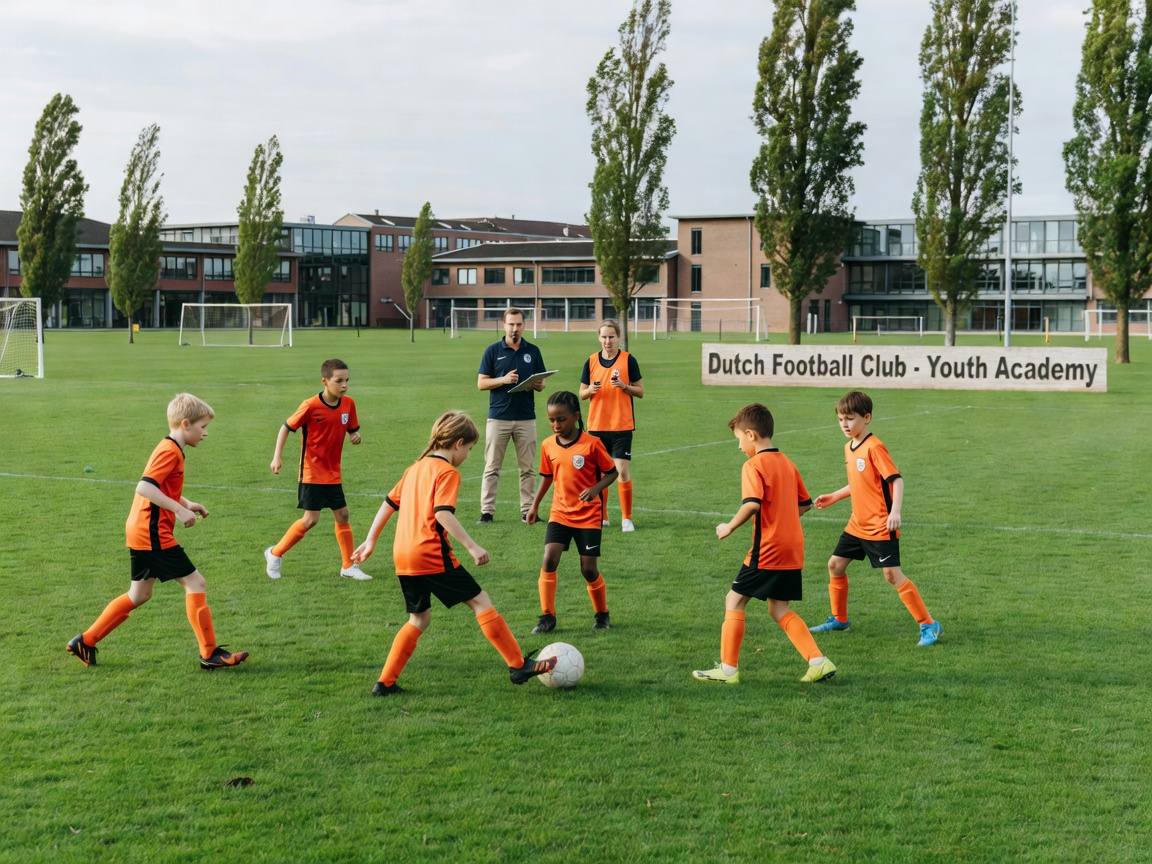
At Dutch Football Club, our philosophy is anchored in the traditional Dutch Total Football methodology. We believe that long-term mastery requires every player to experience diverse game scenarios, build tactical awareness under pressure, and develop problem-solving skills on the pitch.
Understanding the balance between results versus performance in youth development helps maintain perspective throughout competitive seasons. Whether you are navigating recreational versus competitive club soccer, equitable playing time builds resilient, technically confident players who stay in the sport longer.
Best Digital Substitution Tools to Streamline Sideline Management
Rather than carrying complex handwritten matrices or static spreadsheets that cannot handle mid-game injuries, coaches can turn to dedicated web tools designed for sideline use.
Several specialized digital tools are available to help you build balanced rotations:
- Interactive Web Generators: Web platforms like Equal Playing Time Calculator — Free, Fair Sub Schedules offer browser-based tools that calculate shift intervals, create downloadable rosters, and generate structured substitution patterns for multiple team sports.
- Form-Based Planners: Sites such as the Equal Playing Time Calculator | Fair Game Time & Bench Rotation Tool and the Equal Playing Time Calculator - Ensure Fairness in Sports & Teams allow you to enter roster numbers and match durations to produce balanced stint lengths for sideline clipboards.
- Interactive Timer Tools: Applications like the Playing Time Calculator legacy model and its updated beta tool version combine shift planning with game clocks and official season tracking tools.
Features to Look for in a Digital Playing Time Calculator
When choosing an application for game days, prioritize features that match the operational reality of running a youth bench:
- Sport Presets & Field Counts: Ability to switch between 5v5, 7v7, 9v9, and 11v11 configurations.
- Goalkeeper Lock: Options to isolate specialized positions from the outfield rotation.
- Fixed vs. Rolling Substitutions: Settings that accommodate quarter-based rules or continuous play.
- Positional Sorting: Tools that let you group defenders, midfielders, and forwards to maintain tactical shape during rotation waves.
- Roster Profiles: Saved squad lists that eliminate the need to re-enter player names before every kickoff.
Managing Game Day Timers, Audible Alerts, and Roster Exports
Modern web tools streamline match execution through mobile-friendly sideline dashboards.
Using a live countdown timer with customizable audible alerts (such as a three-note chime) gives coaches a 60-second warning before an upcoming substitution window. This ensures substitutes can warm up and receive tactical instructions before the ball goes out of play.
Additionally, one-click PDF exports and text-friendly summary formats allow coaches to share the substitution plan via team communication channels before arriving at the field. This upfront transparency sets clear expectations for players and parents alike.
Frequently Asked Questions About Fair Game Minutes
How does the formula calculate equal playing time when there are uneven rosters?
When total available minutes cannot be divided evenly by squad size, the calculation produces decimal values. The rotation schedule resolves this by adjusting individual shift lengths by one to two minutes across distinct quarters or halves. This ensures that across the entire match, total minutes per player remain within a minimal, balanced margin.
Can a rotation tool accommodate fixed quarter substitutions?
Yes. In leagues where substitutions are permitted only at quarter intervals or halftime, the generator calculates the closest possible whole-period distribution. It assigns players to specific quarter blocks, guaranteeing that no player sits for multiple consecutive quarters while keeping total match minutes as even as possible.
What is the best way to explain bench rotations to unhappy parents?
Transparency is the best approach. Providing the rotation schedule or sharing season-long minute logs demonstrates that substitutions are managed objectively and systematically. Explaining the developmental benefits of consistent game time reinforces the team's commitment to individual player growth.
Conclusion

A structured approach to substitutions transforms matchdays for coaches, players, and families. Eliminating guesswork on the bench allows coaches to focus on tactical instruction, active encouragement, and player development.
At Dutch Football Club in Frisco, Texas, we emphasize total player growth through structured training, tactical versatility, and game intelligence. Using objective management tools on the sideline ensures that every athlete receives the on-field experience necessary to develop technical mastery and confidence. To see how our development philosophy shapes our team culture, read about our perspective on balanced playing time in club soccer.