
Why Elite Soccer Camps Are a Game-Changer for Young Players
Elite soccer camps give competitive young players a focused environment to develop faster than they ever could in a regular season alone. If you're looking for the best options, here's a quick overview:
Top elite soccer camp types at a glance:
| Camp Type | Best For | Cost Range | Format |
|---|---|---|---|
| Collegiate ID Camps | High school prospects (ages 13-21) | $465 - $639 | Residential or commuter |
| University Youth Camps | Intermediate players (ages 10-13) | ~$424 | Day camp |
| International Academy Camps | Ages 8-16, any skill level | Varies | Residential or day |
| Regional Club Camps | Youth players (U8-U18) | $45 - $515 | Day or overnight |
These camps go far beyond basic drills. The best ones combine technical training, tactical awareness, position-specific coaching, and real match play — all under qualified coaching staff. Some even offer college recruiting lectures, video analysis, and goalkeeper-specific sessions.
The difference between a standard camp and an elite one comes down to intensity, structure, and credentials. Elite camps are built for players who are ready to be pushed.
I'm Wilco Ravestijn, spokesperson for Dutch Football Club in Frisco, Texas, where we've spent over 25 years helping young athletes experience the same high-intensity, tactically rich environment you'll find at the best elite soccer camps in the country. My goal with this guide is to help you cut through the noise and find the right fit for your player.
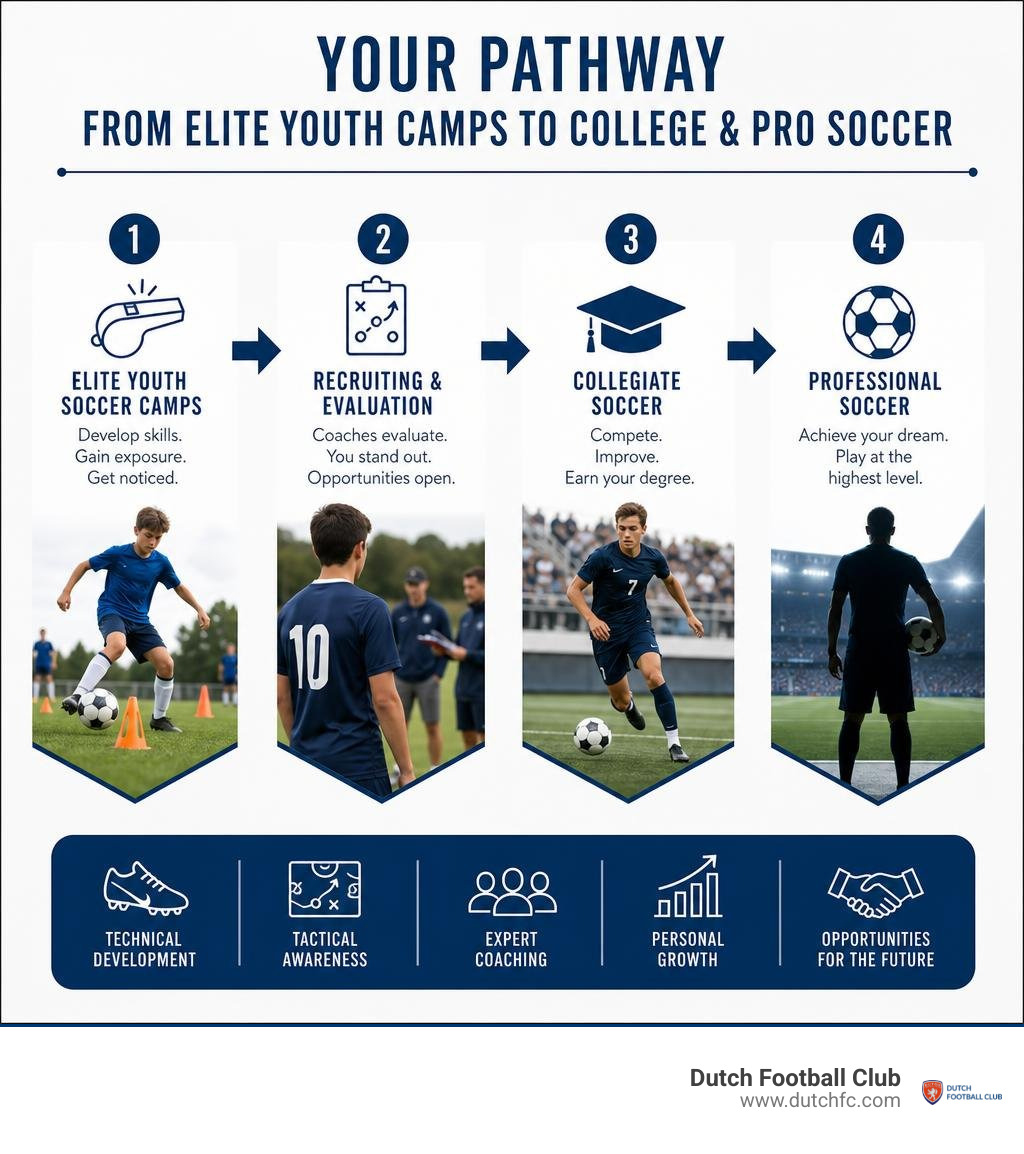
What Defines an Elite Soccer Camp Experience?

When parents and players hear the word "elite," they often wonder if it is just a marketing buzzword or if there is real substance behind it. In the youth soccer landscape of July 2026, the distinction between a standard recreational camp and an elite soccer camps experience is massive.
A standard camp is often designed for general recreation, keeping kids active during summer breaks, and introducing basic skills. An elite camp, on the other hand, is a high-intensity environment focused entirely on rapid player development, athletic growth, and gaining a competitive edge. It is designed for players who already have a solid foundation and want to push their limits.
What Sets Elite Soccer Camps Apart from Standard Camps?
At an elite camp, the daily curriculum is structured to mirror the training environments of professional academies and top-tier collegiate programs. Rather than standing in long lines waiting to kick a ball, players are subjected to high-tempo, intellectually demanding sessions.
The core pillars of this experience include:
- Technical Mastery: Focusing on the "Instructional Keys to Success" through maximum touches. Players are challenged to manipulate the ball under tight pressure, improving their first touch, passing accuracy, and spatial comfort.
- Tactical Awareness: Helping players understand the "why" behind their movements. This involves reading the game, understanding transition phases, and learning how to manipulate the opponent's defensive block.
- Position-Specific Mastery: Tailored coaching that addresses the unique demands of defenders, midfielders, and strikers.
- Complete Athlete Conditioning: Integrating speed, agility, and endurance training directly into soccer-specific drills to build the physical "engine" required for modern high-intensity matches.
If your player is ready to transition from casual play to a structured development pathway, you can Learn more about our skills programs to see how we build these fundamentals weekly.
Target Age Groups and Skill Levels
Elite soccer camps are not "one-size-fits-all." They are carefully segmented to ensure that players are grouped with peers of similar physical maturity and technical capability. Generally, these camps serve:
- Intermediate and Advanced Youth Players (Ages 8-13): Focuses heavily on skill acquisition, coordination, and introducing small-sided tactical concepts.
- High School Prospects (Ages 14-18): Focuses on tactical maturity, physical conditioning, and preparing for the collegiate recruiting cycle.
- College Transfers and Gap-Year Players (Ages 18-23): Specialized ID camps often accommodate older players, including NCAA transfer portal athletes looking for direct exposure to collegiate scouts.
Grouping players accurately is vital. If a camp is too easy, development stalls; if it is too difficult, confidence drops. To find out where your player fits in a competitive club landscape, you can Explore our competitive tryouts to evaluate their current standing.
Comparing the Best Elite Soccer Camps
Choosing the right camp requires understanding the different formats available. Each type of camp serves a distinct purpose, whether you are trying to get recruited by a Division I program or simply looking to experience European training methodologies.
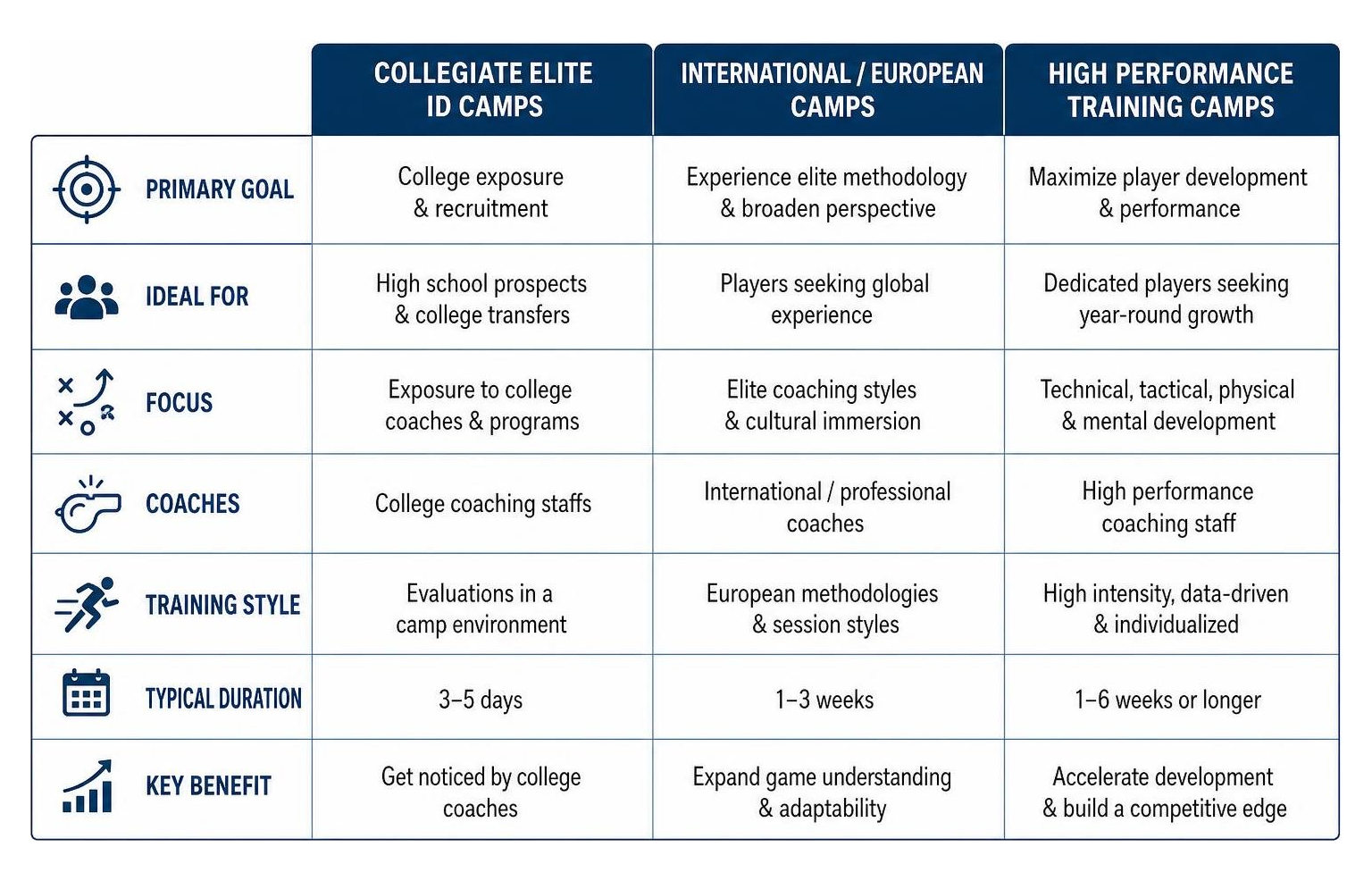
Collegiate Elite ID Camps
If your child's goal is to play college soccer, collegiate ID camps are an absolute must. These camps are specifically designed to give high school players and college transfers direct exposure to university coaching staffs.
A prime example is the Summer Elite ID Camps – Portland Soccer Camp, which is tailored for competitive boys aged 13 to 21 (including junior college and transfer portal players up to age 23). Priced at $639 for residential campers and $539 for commuters, this camp takes place on premium collegiate surfaces like those at the Clive Charles Soccer Complex.
These camps are highly structured, featuring evening tournament matches under stadium lights to simulate real collegiate game-day pressure. Additionally, they provide modern recruiting tools like Veo tactical video analysis packages (available for a $50 add-on, or $150 with a personal 30-minute coach evaluation) and classroom lectures on the NCAA recruiting process.
University-Hosted Youth Elite Camps
For younger intermediate and advanced players who are not yet ready for the recruiting cycle but want to experience a collegiate environment, university-hosted youth camps are a fantastic option.
Programs like the Michigan Youth Elite Camp, which you can explore by visiting the page to View Youth Elite Camp Details, cater specifically to boys aged 10 to 13 (grades 5-8). With a strict capacity limit of 125 players to maintain low coach-to-player ratios, this camp costs $424.
The curriculum here focuses heavily on possession-based training, tactical "chalk talks," and fun activities to keep players engaged over a 7-hour daily schedule. Campers also get to tour the university's athletic facilities, giving them an inspiring taste of what it takes to be a student-athlete.
International Academy Elite Camps
For players looking for global exposure and a taste of professional academy life, international academy camps are unmatched. These programs allow players to experience elite European training methodologies firsthand.
Many top-tier European clubs offer international academy experiences where players can participate in high-intensity training, tactical match analysis, and complete athletic immersion. Whether held at official training facilities in Europe or through domestic satellite camps, players learn legendary training methods directly from UEFA-certified academy coaches in a highly structured environment.
Regional Club-Based Elite Camps
Regional camps offer highly competitive training environments close to home, bridging the gap between local travel soccer and national-level academies.
These programs are typically built for competitive youth players, offering both commuter and overnight residential options. Under the direction of experienced coaches, players experience a rigorous multi-day schedule featuring technical training, tactical instruction, and various match formats (7v7, 9v9, and 11v11).
On the more accessible end of the spectrum, programs like the Northwest College Elite Soccer Camp in Powell, Wyoming, offer two-day commuter sessions for boys and girls ages U8-U18 for just $45, demonstrating that high-quality collegiate instruction can be found at various price points.
Core Curriculum and Training Methodologies
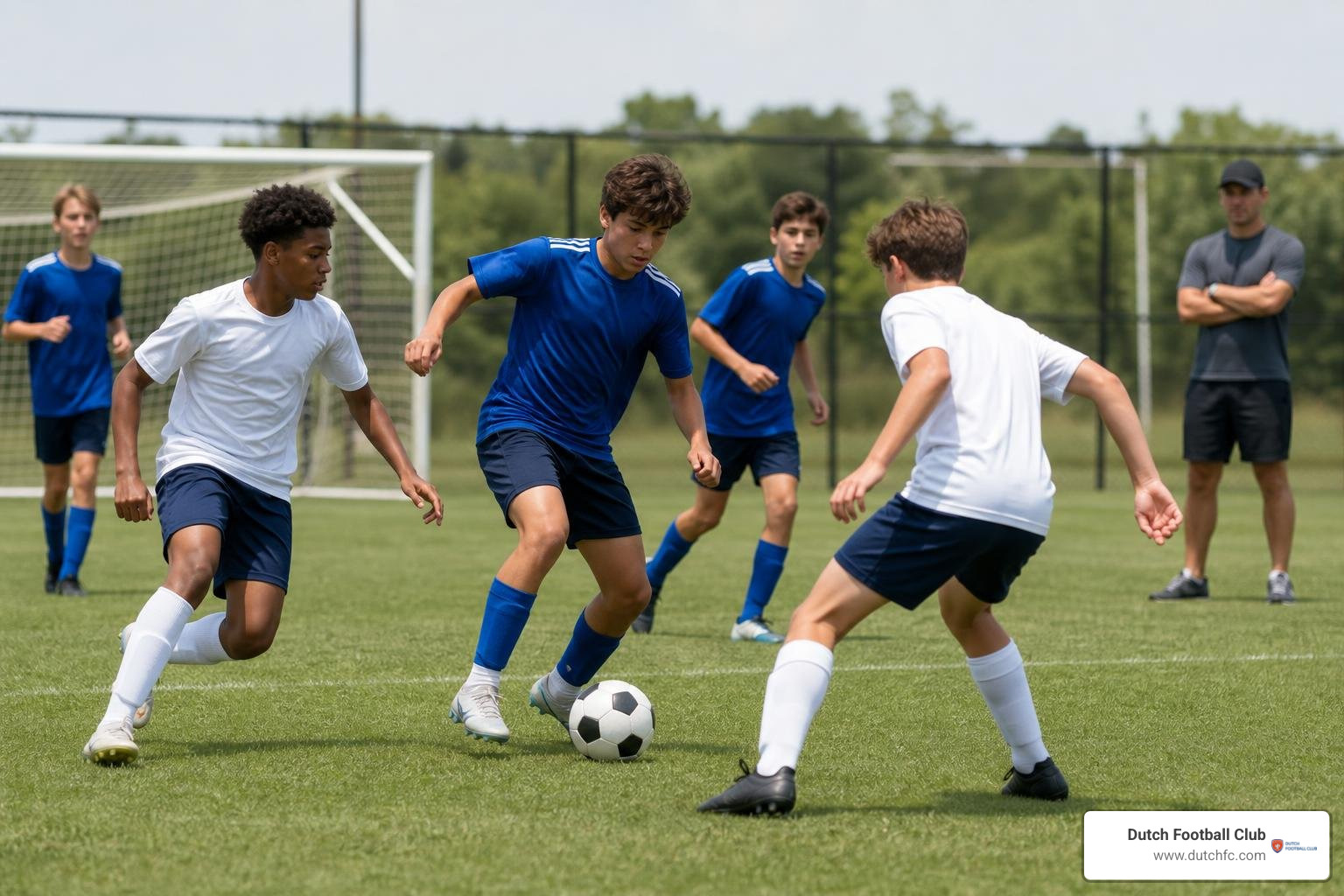
What actually happens on the pitch during an elite camp? A proven curriculum does not rely on random drills. Instead, it focuses on developing the "total player" through structured, progressive training methodologies.
Technical and Tactical Development
At the core of any elite curriculum is the concept of "maximum touches." Players must spend the majority of their training time with the ball at their feet. This is achieved through signature ball drills designed to improve fast footwork, tight-space control, and spatial awareness.
Furthermore, elite training emphasizes "two-way impact" training. In modern soccer, every player must be comfortable attacking and defending. Drills are structured to transition immediately, forcing attackers to defend the moment they lose possession, and forcing defenders to instantly transition into creative playmakers.
This holistic approach aligns perfectly with our beliefs. If you want to understand how we structure our training programs to build complete players, you can Read about our club philosophy and explore how we implement these standards daily.
Match Play and Game-Like Scenarios
No matter how good a player is in isolated drills, they must be able to execute those skills in chaotic, real-match situations. Elite camps integrate game-like scenarios using a structured progression:
- Small-Sided Games (3v3 to 6v6): These games ensure high engagement, quick decision-making, and constant transitions, maximizing the number of touches each player gets.
- Tactical Progressions (7v7 to 9v9): This phase introduces positional responsibilities, spacing, and team shape, helping players translate technical skills into tactical frameworks.
- Full-Sided Matches (11v11): Played under realistic match conditions, often in stadium environments, to test players' endurance, tactical discipline, and communication.
To see how we organize our players into competitive, balanced groups that foster this level of tactical execution, you can Discover our squad system.
Coaching Staff and Mentorship
A camp is only as good as the coaches running it. The leadership at an elite camp is vastly different from your local summer day camp.
Elite Coaching Credentials
The coaching staff at elite soccer camps typically includes:
- Active College Coaches: Head and assistant coaches from NCAA Division I, II, III, and NAIA programs who know exactly what it takes to play at the next level.
- Professional Academy Directors: Coaches who spend their entire careers developing players for professional clubs.
- Former Professional Players: Athletes who have played at the highest levels and can share invaluable, real-world positional insights.
- Olympic Development Program (ODP) Coaches: Coaches certified at the regional and national levels to identify and nurture top talent.
For instance, regional programs often leverage coaches with over 20 years of experience across high school, collegiate, and professional levels to design high-intensity curriculums. Having elite mentors on the field provides players with direct, actionable feedback. If you would like to see the caliber of coaches we bring to the pitch, you can Meet our professional coaches.
How to Choose the Right Elite Soccer Camps for Your Goals
With so many options available, you must evaluate camps based on your player's specific developmental goals:
- For College Exposure: Choose Collegiate ID camps hosted by universities where your child is realistically interested in academic and athletic enrollment. Look for camps that offer video packages and recruiting seminars.
- For Pure Skill Development: Look for camps with low coach-to-player ratios (ideally 1:10 or better) that focus on maximum touches, signature ball work, and position-specific instruction.
- For High-Intensity Immersion: Residential academy camps are best for teaching independence, athletic discipline, and providing a 24/7 professional athlete experience.
Aligning your camp selection with a long-term development strategy is key. To learn more about how we guide players through their athletic journeys and help them secure opportunities at the collegiate level, you can Learn about our college placement program.
Frequently Asked Questions About Elite Soccer Camps
What should players pack for a residential elite soccer camp?
For a multi-day residential camp, preparation is key to staying comfortable and performing at your best. Campers should pack:
- On-Field Gear: Multiple sets of training shirts, shorts, and socks, broken-in cleats, running shoes/sneakers, shinguards, a high-quality soccer ball, and a reusable water bottle.
- Dorm Essentials: Twin-long bed sheets, a pillow, blankets, bath towels, and a fan (as some dorms lack central air conditioning).
- Personal Care: Toiletries, sunscreen, lip balm, recovery slides/sandals, and any personal medical items or athletic tape.
Are goalkeeper-specific training sessions available at these camps?
Yes, most reputable elite camps offer dedicated goalkeeper training. Goalkeepers require specialized instruction that outfield players do not. These sessions focus on shot-stopping, handling, diving, footwork, positioning, and distribution. Crucially, goalkeepers are integrated back into small-sided and full matches later in the day to practice their decision-making and communication under real match pressure.
If you are looking for year-round specialized training to complement your camp experience, you can Check out our goalkeeper training programs.
How do elite camps help with college recruiting?
Elite camps aid college recruiting by:
- Direct Evaluation: Putting you directly on the radar of college scouts who watch you train and play over several days.
- Recruiting Seminars: Hosting lectures that explain NCAA eligibility, the transfer portal, and how to contact coaches.
- Tactical Video: Providing high-quality match footage (like Veo camera links) that you can use to build highlight reels.
- Written Evaluations: Offering personalized scout sheets detailing your strengths and areas for improvement.
Conclusion
Finding the right development pathway is one of the most important decisions a young athlete and their parents can make. Whether you choose a local collegiate ID camp, an international academy experience, or a regional club-based program, the key is to find an environment that challenges the player physically, technically, and mentally.
At Dutch Football Club in Frisco, Texas, we are proud to offer a development model centered on the legendary Dutch "Total Football" philosophy. We believe in building the "total player" through high-value, accessible training that emphasizes game intelligence, technical mastery, and strong personal character.
To learn more about how we integrate character building into our athletic curriculum, you can Discover our Game Plan for Life. And if you are ready to take the next step in your soccer journey, Book your spot at our elite soccer camps today and experience the difference of elite-level training first-hand!