
Why Soccer Camps for Beginners Are the Best First Step Into the Game
If you're exploring soccer camps for beginners, here's a quick answer to help you decide:
What to look for in a beginner soccer camp:
- Ages served: Most beginner camps accept kids ages 4–12, grouped by age (4–5, 5–6, 7–8, 9–12)
- Session length: Half-day (9am–12pm) or full-day (9am–3pm) options are widely available
- What to bring: Shin guards, athletic shoes, water bottle, and a snack
- Core focus: Ball control, dribbling, passing, small-sided games, and building confidence
- What makes a good camp: Low coach-to-player ratios, age-appropriate groupings, and a structured curriculum
Your child just said they want to try soccer. Now what?
Finding the right first camp can feel overwhelming. There are dozens of options, and it's hard to know what's actually age-appropriate, safe, and worth the money.
The good news: beginner soccer camps are designed specifically for kids who have never played before. They focus on fun, fundamentals, and building the kind of confidence that keeps kids coming back to the sport.
This guide covers everything parents in Frisco, TX need to know — from what to pack to how coaches group kids by age and skill level.
I'm Wilco Ravestijn, spokesperson for Dutch Football Club in Frisco, Texas, where we've spent over 25 years helping young players develop through Dutch-style "Total Football" training — including beginner-friendly camp programs built around low-cost, high-value development. In this guide, I'll walk you through exactly what to look for so your child's first soccer camp experience is one they'll never forget.
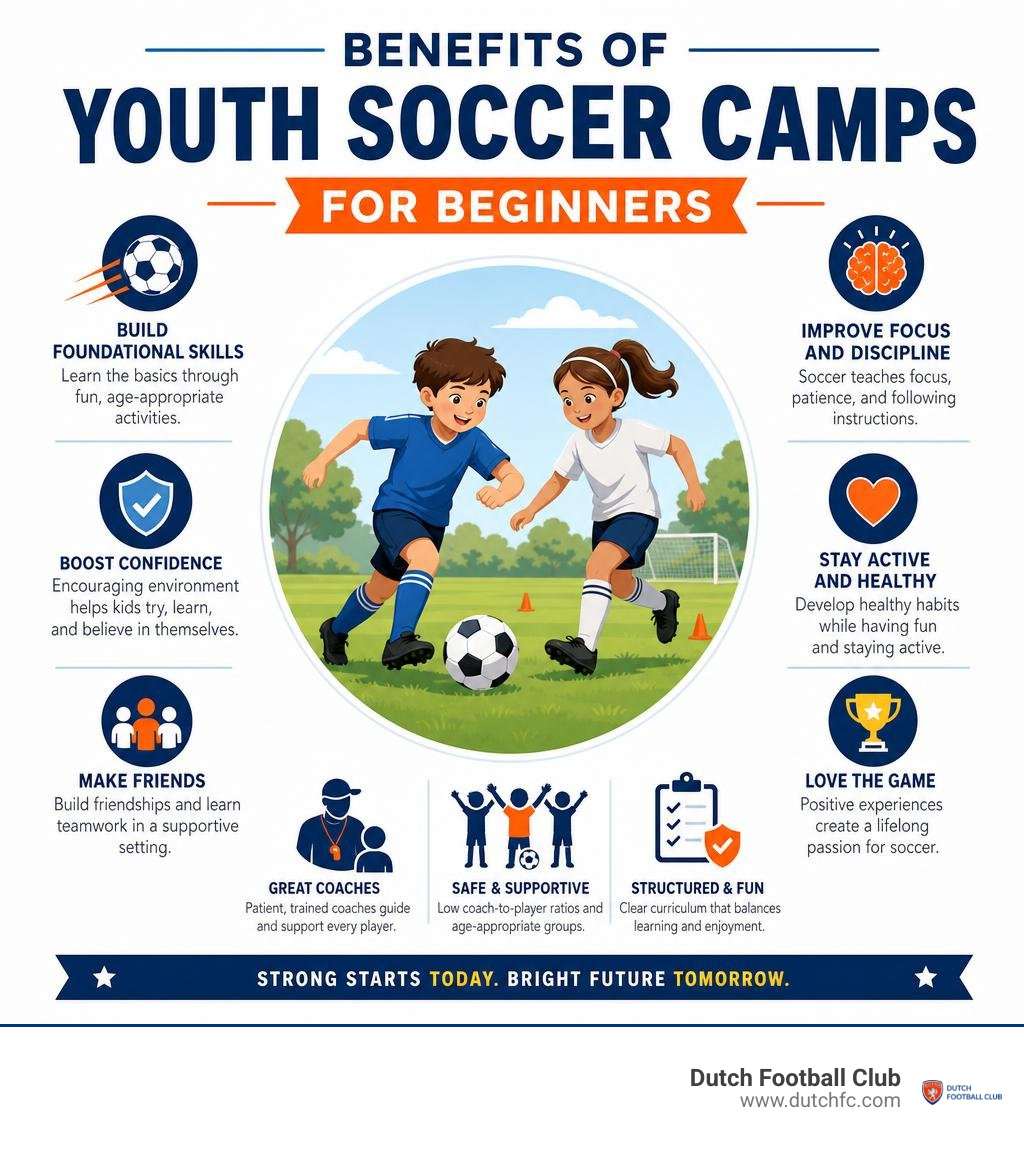
What to Expect at Soccer Camps for Beginners
Enrolling your child in their first sports camp can bring up a lot of questions. Will they be overwhelmed? Will they get left behind by more experienced players? High-quality programs structure their camps to prevent these exact issues.
At a dedicated beginner camp, the primary goal is to foster a love for the game. The atmosphere is encouraging, positive, and active. Instead of grueling fitness drills, expect to see laughter, creative games, and plenty of high-fives.
To ensure every child has a positive experience, camps utilize strategic skill-level groupings and narrow, age-appropriate brackets. Grouping children this way ensures that a 5-year-old taking their very first steps on the pitch isn't overwhelmed by an energetic 10-year-old. Developmentally, a child’s physical coordination and attention span change drastically every two years, which is why grouping by tight age bands (such as 5–6, 7–8, and 9–12) is an industry best practice.
When choosing a program, you will typically need to decide between half-day and full-day configurations. Here is a quick breakdown to help you decide which option fits your family's schedule and your child's stamina:
| Feature | Half-Day Camp | Full-Day / Extended Camp |
|---|---|---|
| Typical Hours | 9:00 AM – 12:00 PM (3 hours) | 9:00 AM – 3:00 PM (6 hours) |
| Best Suited For | Toddlers (ages 4–5) & first-time campers | Older beginners (ages 6–12) with high energy |
| Stamina Level | Low to moderate; perfect for shorter attention spans | High; requires physical endurance for afternoon play |
| Lunch Requirements | No lunch needed (only a light mid-morning snack) | Packed lunch required; often includes supervised social downtime |
| Curriculum Focus | Core technical skill-building and basic motor skills | Technical morning training, lunch activities, and afternoon matches |
Age Groups and Formats in Soccer Camps for Beginners
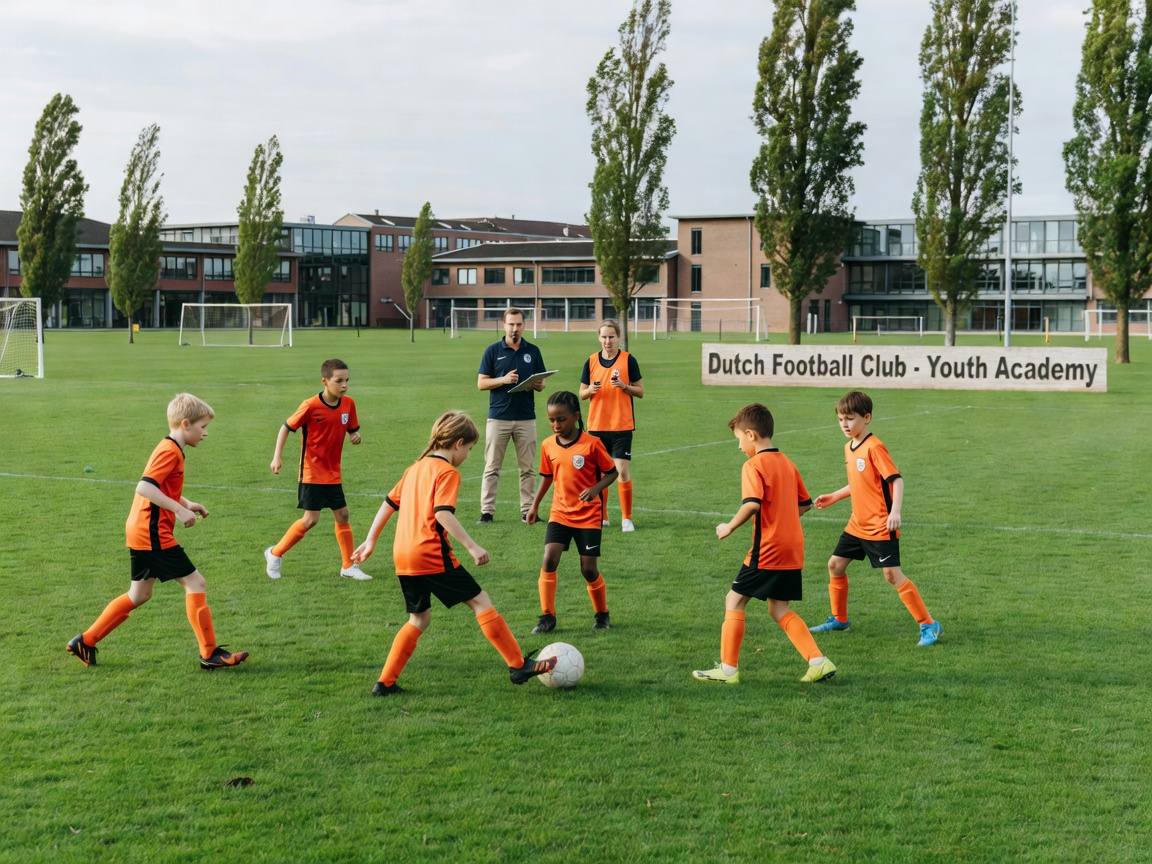
Youth soccer development programs cater to distinct developmental stages. For our youngest athletes, toddler programs (often designed for ages 4 to 5) serve as a gentle, playful introduction to the sport. These sessions focus on basic motor skills, learning field boundaries, following simple directions, and simple socialization.
For older children, programs typically span ages 5 to 12. As children grow, the training transitions from basic spatial awareness to targeted technical control. If you are looking for local opportunities to get your child started, explore our structured youth Camps to find a session that matches your schedule.
Across the country, excellent beginner formats exist to guide families. You can learn more about national player development initiatives and standards through US Youth Soccer, which highlights the importance of structured, age-appropriate training and tiered camp options that keep kids engaged through the warmer months.
A Typical Daily Schedule for First-Time Campers
What does a day in the life of a beginner camper actually look like? High-quality camps follow a structured, predictable routine that balances high-energy physical training with necessary rest periods.
Here is what a typical morning half-day schedule looks like:
- 9:00 AM – Arrival & Warm-Up: Campers check in, meet their coaches, and kick off the day with a fun icebreaker (like a "Joke of the Day" or a light coordination game) to shake off any morning jitters.
- 9:15 AM – Technical Skill-Building: Coaches introduce the "Skill of the Day" (such as basic dribbling or passing) through fun, game-like drills.
- 10:15 AM – Snack & Hydration Break: A mandatory 15-minute rest period in the shade to refuel and drink water.
- 10:30 AM – Small-Sided Games: Campers apply their new skills in low-pressure mini-matches (often called "M&Ms" for the youngest groups) where everyone gets plenty of touches on the ball.
- 11:45 AM – Daily Recap & Cool-Down: A fun wrap-up session celebrating individual effort and teamwork.
- 12:00 PM – Half-Day Check-Out: Half-day campers head home, while full-day campers transition to lunch.
For full-day programs, the afternoon focuses on building social bonds and applying skills in structured game play. After a supervised lunch break—frequently packed with fun brain-breaks like sports trivia, riddles, or storytime—campers spend the afternoon participating in friendly tournament-style games (like a mock "World Cup") before checking out at 3:00 PM.
Core Skills and Curriculum for New Players
At Dutch Football Club, we firmly believe that a structured, development-focused curriculum is vastly superior to unstructured play when it comes to building long-term confidence in young athletes. When children are simply thrown onto a field to "just play," dominant players take over, and beginners rarely get to touch the ball.
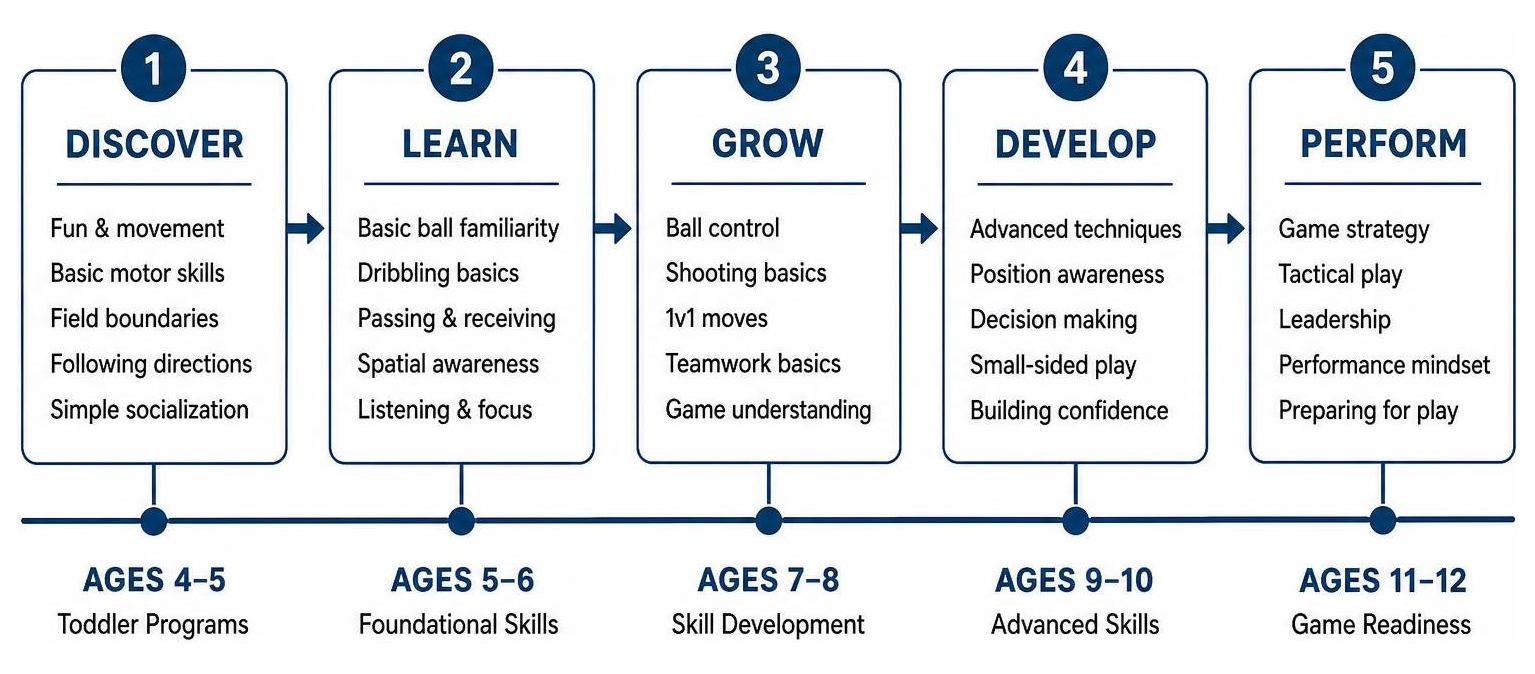
A deliberate, progressive curriculum ensures that every child receives the instruction they need to master the ball at their own pace. By utilizing small-sided games (such as 3v3 or 4v4 matches), we maximize individual touches. More touches on the ball directly translate to faster skill acquisition, greater spatial awareness, and a much more enjoyable experience.
Essential Fundamentals Taught at Soccer Camps for Beginners
A quality beginner curriculum strips away complex tactics and focuses entirely on individual comfort with the ball. The absolute core fundamentals taught include:
- Ball Control: Learning how to use different parts of the foot (inside, outside, and sole) to stop, trap, and tame a moving ball.
- Dribbling Basics: Keeping the ball close to the body while moving, changing directions, and navigating around obstacles.
- Passing Accuracy: Learning how to push the ball cleanly to a teammate using the inside of the foot.
- Basic Spatial Awareness: Understanding boundaries, learning which direction to run, and understanding basic attacking and defending concepts.
To see how we integrate these elements into our year-round training models, check out our specialized Skills programs and learn more about our foundational Club Philosophy.
Building Confidence and Social Skills on the Pitch
Soccer is a powerful vehicle for personal growth. Beyond the physical benefits, soccer camps for beginners help children develop vital life skills.
For young children, attending camp is often one of their first experiences navigating a structured group environment outside of school. It teaches them how to listen to instruction, cooperate with peers, share a ball, and celebrate the success of others.
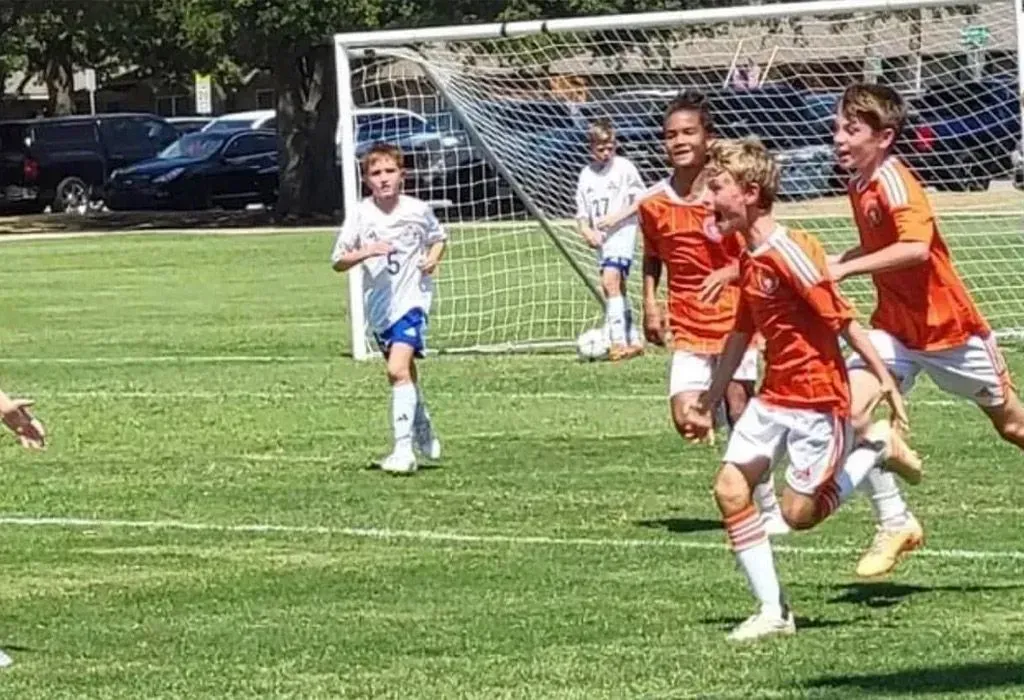
Through positive reinforcement, coaches help children overcome separation anxiety and self-doubt. When a beginner successfully completes a dribbling sequence or scores their first goal in a small-sided match, their self-esteem skyrockets. This emotional growth is a core component of what we teach; you can read more about our holistic approach to character development in our Game Plan for Life.
Preparing for Camp: Gear, Logistics, and Safety
Proper preparation is the key to a smooth, tear-free first day of camp. Sending your child to camp with the right gear ensures they remain safe, comfortable, and focused on having fun.
When packing your child's camp bag, use this checklist to ensure they have everything they need for a successful day:
- Shin Guards: A non-negotiable safety requirement. They must be worn under long soccer socks to prevent shifting during play.
- Appropriate Footwear: Clean, flat-soled athletic shoes or indoor soccer shoes for indoor turf facilities; outdoor cleats (no metal studs) for grass fields.
- A Labeled Water Bottle: Hydration is critical. Pack an insulated bottle filled with cold water.
- Healthy Snacks: Fresh fruit, granola bars, or crackers to boost energy during designated snack breaks.
- Sunscreen: Apply a generous layer before drop-off, and pack a bottle for midday reapplication.
- An Extra Change of Clothes: Just in case of unexpected spills, muddy fields, or bathroom accidents.
Coach Qualifications and Camp Safety
As a parent, your primary concern is your child's safety and well-being. A great camp should boast highly qualified coaches who aren't just great players, but excellent educators.
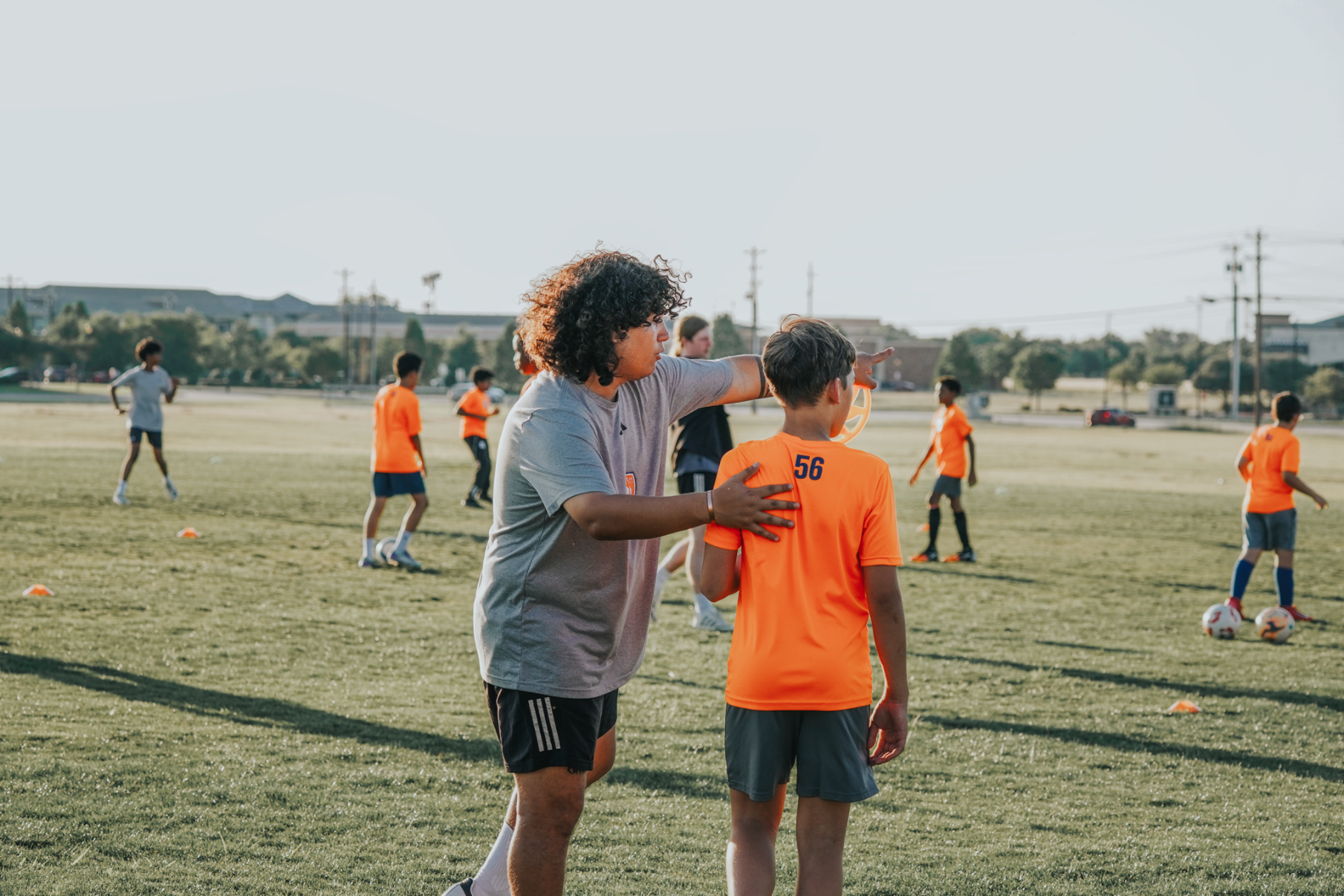
Look for programs that maintain a low coach-to-player ratio. A low ratio ensures that your child receives personalized, individual feedback while remaining under close supervision at all times. Additionally, verify that the organization conducts thorough background checks on all staff members and has first-aid certified personnel on-site. For more tips on evaluating youth sports safety, browse our parent Resources.
Check-In, Check-Out, and Medical Policies
Logistics should be seamless and secure. During drop-off, camps should have a designated, secure check-in area where parents sign their children in. At check-out, staff should strictly enforce sign-out procedures, requiring authorized pickup signatures or photo identification.
If your child has a severe allergy or requires daily medication, make sure to communicate this directly to the camp coordinator at the front desk during check-in on the very first day. While youth camp staff generally cannot administer medications directly, they will store them in a secure, easily accessible location and ensure they are on hand in case of an emergency.
Frequently Asked Questions about Beginner Soccer Camps
Can my 4-year-old attend a beginner soccer camp?
Yes, absolutely! Many modern soccer camps offer specialized early childhood programs tailored specifically for ages 4 and 5. These programs focus heavily on basic motor skills, physical coordination, simple socialization, and imaginative games rather than rigid tactical drills.
Many high-quality introductory programs feature dedicated tracks designed specifically for ages 4 to 6. These introductory sessions are highly encouraging, ensuring that your child's first step onto the field is filled with smiles and positive reinforcement.
What is the difference between half-day and full-day camps?
The main differences lie in physical stamina requirements, daily schedules, and family logistics. Half-day camps typically run for three hours in the morning (e.g., 9:00 AM to 12:00 PM) and focus strictly on core technical skill-building and small-sided games. This format is perfect for younger children or those who are new to organized sports camp environments.
Full-day camps extend into the afternoon (typically ending around 3:00 PM) and include a supervised lunch break followed by tactical scrimmages, fun trivia games, and tournament-style matches. Full-day formats are best suited for older beginners who have the physical endurance to handle a six-hour day.
Do campers need outdoor cleats or indoor flat shoes?
This depends entirely on the facility hosting the camp. If the camp takes place on an outdoor grass field, outdoor soccer cleats (with plastic or rubber studs—never metal) are highly recommended to prevent slipping.
However, if the camp is hosted inside an indoor sports facility with synthetic turf, outdoor cleats can actually cause tripping hazards or damage the surface. In these indoor environments, flat-soled athletic sneakers or specialized indoor turf shoes are required. Always check your camp’s specific welcome packet or facility guidelines before purchasing new footwear.
Conclusion
Enrolling your child in soccer camps for beginners is one of the most rewarding decisions you can make for their physical, social, and emotional development. By choosing a program that prioritizes a structured, fun-first curriculum, low coach-to-player ratios, and age-appropriate groupings, you are setting your child up for a lifetime love of the beautiful game.
At Dutch Football Club in Frisco, Texas, we are committed to delivering world-class, affordable youth soccer training. Whether your child is kicking a soccer ball for the very first time or preparing to make the leap into competitive club soccer, our Dutch-style development model is designed to help them thrive.
As your child grows in the sport, you may eventually begin navigating the competitive landscape. To help you prepare for that future journey, take a look at our comprehensive guide on understanding playing time in club soccer to learn how we balance player development with healthy competition. We look forward to seeing your young athlete shine on the pitch!